Table of Contents
Estimated reading time: 20 minutes
Key Takeaways
- Car accident animal loose road cases often involve pets, strays, or livestock creating sudden roadway hazards; liability depends on control, fencing, leash laws, and local range rules.
- Animal owner liability car accident claims may be proven with evidence of negligent control, statutory violations, or strict duties for livestock containment, depending on the jurisdiction.
- Recoverable damages commonly include medical bills, vehicle repair or total loss, lost wages, and pain and suffering; severe rural crashes can lead to substantial livestock road accident compensation.
- To protect a pet ran in front of car crash claim, document scene conditions, open gates or broken fencing, witness accounts, and dashcam footage that shows reasonable evasive action.
- When a stray dog caused car crash and no owner is identified, your comprehensive, collision, and PIP/Med‑Pay coverages may respond first; insurers can later subrogate against a found owner.
- Speak with a local attorney promptly when injuries are significant, liability is disputed, or a public entity or ranching operation may be involved; deadlines and notice rules can be short.
Car accident animal loose road incidents create urgent legal questions: who is liable when a pet, stray dog, or livestock causes a crash and what damages can you recover? If you were injured swerving to avoid a dog, hitting cattle at night on a rural highway, or colliding with a leash‑slipped pet in the neighborhood, the rules that apply are not always obvious. This guide explains how laws vary by location and which facts matter most—so drivers, injured passengers, and pet or livestock owners can understand their rights and responsibilities.
We cover what counts as an “animal on the road,” immediate steps to preserve your claim, who can be liable, negligence and strict‑liability concepts, insurance coverages, common defenses, timelines and outcomes, and prevention. You will also find scenario‑based guidance for animal owner liability car accident claims, from a stray dog caused car crash to a hit cow road accident lawsuit.
Understanding car accident animal loose road incidents
When an animal enters a travel lane or shoulder, it can directly strike a vehicle or force a driver into evasive maneuvers that cause secondary crashes. Liability often turns on whether a person or entity had a duty to restrain the animal and breached that duty. In many states, leash laws and fencing statutes inform those duties, while some rural areas use open‑range or closed‑range rules for livestock near public roads. Because these frameworks vary widely, consult local law and document the scene thoroughly.
What counts as “animal on the road” and common crash scenarios
“Animal on the road” means any domestic pet, stray or unowned animal, or livestock present on a public roadway or shoulder that either strikes a vehicle or causes a driver to take a reasonable evasive action leading to a crash.
Common scenarios
- Pet ran in front of car crash claim. A leashed or unleashed dog bolts from a yard or slips a collar, causing impact or a swerve. Owner duties typically include reasonable restraint under local animal control rules. Practical steps and owner‑responsibility factors are outlined in this animal‑collision claim guide and in discussions of driver reactions and owner duties when avoiding animals in the road from injury practitioners.
- Stray dog caused car crash. No owner is immediately identifiable. Animal control involvement, microchip scans, and community complaints can matter. Liability for public entities is limited and requires strict notice and duty analysis, but private insurance may still help; owner‑duty principles and municipal‑liability limits are discussed here.
- Livestock wandering onto highways. Cattle, horses, sheep, and other farm animals can cause high‑severity collisions with catastrophic injuries and property loss. Duties often center on fencing, gate maintenance, and range rules; see analyses of livestock liability and rural roadway risks from injury litigators and agricultural law insights on ranch/farm exposures. Open‑ vs closed‑range distinctions and duty standards also appear in FAQs about hitting animals from practitioners. These sources highlight the severity and unique proof issues common in a hit cow road accident lawsuit and livestock road accident compensation claims.
- Wildlife vs domestic animals. Wild animals (e.g., deer) usually do not have human “owners,” making third‑party negligence harder to prove. Claims often proceed through your own auto policy coverages, while domestic animal claims focus on owner or keeper control duties. Practical distinctions and guidance appear in this animal‑collision resource and are echoed in other legal explainers discussing liability.
Immediate steps to take after a crash involving an animal
Prompt, methodical evidence collection helps insurance claims, subrogation efforts, and lawsuits by preserving facts that prove fault, causation, and damages.
- Safety first: “Move to a safe location if possible, turn on hazard lights, call 911 for injuries.”
- Call police and animal control: “Request a police report and ask animal control to attend—police reports and animal control records are critical evidence.” See guidance on reporting and documentation in this animal‑collision guide and liability commentary on owner/municipal duties.
- Photograph and document the scene: Vehicle damage (all angles), the animal (from a safe distance), skid marks, broken fences/gates, road signs, weather/lighting conditions, license plates, and debris. Mention dashcam and phone GPS timestamps. Practical checklists and documentation tips appear here.
- Collect witness information: “Get names, phone numbers, and a one-sentence account from each witness.” Why witness accounts matter—especially in evasive‑maneuver crashes—is discussed by litigators.
- Seek medical attention and keep records: “Obtain immediate care; save ER notes, imaging, prescriptions, and follow-up instructions.” Medical documentation is crucial to proving damages in animal‑related crashes.
- Notify your insurer promptly: “Report facts only; do not admit fault or speculate. Ask about comprehensive vs collision coverage for animal incidents.” Overview of coverage responses appears in this guide.
- Preserve physical and digital evidence: “Keep damaged parts, save dashcam footage, screenshots of posts about the incident, and copies of the police and animal control reports.”
For additional scene‑evidence ideas, see resources on using witness statements effectively and collecting device and vehicle data such as the event data recorder (“black box”).
Evidence and burden of proof for animal-related crashes
To prove an animal owner’s liability you must establish duty, breach, causation, and damages—here’s what each element looks like in animal cases.
- Duty: “Owner or keeper must take reasonable measures to prevent their animal from entering public roadways (leash laws, fencing, pasture management, gates).” See overview of owner/keeper duties.
- Breach: “Specific acts or omissions such as open gates, broken fencing, ignoring prior escape reports, or violating leash/containment statutes.” Examples of violations and fault assessments are discussed in practice FAQs.
- Causation: “Proof the animal’s presence directly caused impact or a reasonable evasive maneuver that led to injury/damage.”
- Damages: “Medical bills, vehicle damage, lost income, future care costs, pain and suffering.” See damages categories and documentation tips from practitioners.
Key evidence to collect
- Police and animal control reports — official documentation, sketches, code citations, and microchip/owner identification can be pivotal. Commentary on their evidentiary value appears here.
- Witness statements — corroborate how the animal entered the road and whether it had been seen loose before; medical‑damages proof and witness corroboration are emphasized in legal guides.
- Photographs and dashcam/CCTV — objective visuals of animal position, lighting, signage, fencing, and skid marks.
- Veterinary/animal control records and microchip scans — identify the owner and show prior escape or bite history if relevant.
- Prior complaints and municipal records — support foreseeability and repeated hazards, especially in claims implicating local authorities; see discussion of evasive‑maneuver crashes and local context here.
For a deeper dive into valuation evidence once liability is established, see this guide on calculating car‑crash compensation.
Who can be held liable?
Liability may attach to a range of parties depending on the facts.
Animal owners (pets and livestock)
Owners have duties that include reasonable restraint and containment—leash laws for pets and fencing/gate maintenance for livestock. These duties and common owner‑breach patterns are discussed in this animal‑collision guide and agricultural‑liability analyses from injury firms.
- Evidence of breach: open or defective gates, broken fencing, prior escape reports, violation of local codes.
- Proof of ownership/control: microchip/ear tag records, vet and shelter files, neighbor testimony.
- Insurance pathways: homeowner, renter, farm/ranch, or commercial liability policies commonly respond when negligence is shown; owner and policy interactions are discussed here.
Landowners, farmers, and contractors
Landholders and on‑site contractors may be liable if poor fencing, broken gates, or negligent management allowed animals onto the road. Agricultural‑liability and fencing‑duty discussions appear in this practice overview from ranch/farm counsel. These cases frequently arise in a hit cow road accident lawsuit where livestock road accident compensation is significant.
Municipal or public authorities
Public‑entity liability is limited and fact‑specific. Potential theories include failure to act after documented stray‑animal complaints, missing signage in known hazard zones, or dangerous road design. These claims are constrained by sovereign immunity defenses and short notice deadlines. See general animal‑claim guidance here and public‑entity duty discussions from litigators.
No identifiable owner (stray dog caused car crash)
If no owner is found, you can often proceed under your own coverages:
- Vehicle damage: comprehensive for direct animal impact; collision for swerves that cause other impacts—see coverage distinctions explained here.
- Medical expenses: PIP/Med‑Pay where available.
- UM/UIM: sometimes available where the unknown owner is treated like an uninsured party; see discussion of owner‑unknown paths from litigators.
Legal theories and standards
Different legal theories determine how easy it is to recover: negligence, strict liability/statutory rules for livestock, and comparative fault rules.
Negligence
Negligence means duty, breach, causation, and damages. Statutory violations (e.g., leash or fencing codes) can support negligence per se. Owner/keeper duties and statutory enforcement themes appear in this guide. Public explainers of owner duties and code violations also frame negligence standards for roadway animal cases.
Strict liability / livestock statutes
Some jurisdictions impose strict or near‑strict liability for livestock on certain roads, or adopt open‑range/closed‑range regimes that shift duties and proof burdens. When strict schemes apply, an owner may be liable without proving specific negligence—often central to a hit cow road accident lawsuit or large‑animal case. See overviews about livestock liability, plus agricultural practice commentary on ranch exposures and injury‑firm analyses of livestock duties.
Comparative/contributory negligence
Driver conduct still matters. “If you were speeding or distracted, your recoverable damages may be reduced proportionally or barred entirely in a contributory fault state.” See damages and fault discussions in animal‑related cases here and practical reminders to assess driving behavior in broader claims contexts.
Breach of statutory duties
Leash laws, animal control ordinances, and fencing statutes can define duties and support negligence per se. Laws vary by jurisdiction, so adapt examples locally and verify codes. Legal ramifications of animal‑related roadway crashes are discussed in public legal commentary and duty assessments for livestock appear in practice FAQs.
Specific claim scenarios and what to expect
Pet ran in front of car crash claim
Typical defenses: owners argue the escape was unforeseeable or that they complied with leash laws, or they blame driver distraction or speed. Fault factors and rebuttals appear in damages/causation explainers from practitioners and duty resources on owner control.
How to rebut: show prior escapes, open or defective fencing, neighbor complaints, code violations, dashcam/video, and skid‑mark analysis consistent with a reasonable evasive maneuver.
Damages: vehicle repair/replacement, medical bills and future care, lost wages, and pain and suffering. If your own pet was injured due to another owner’s negligence, veterinary bills may be claimed as property loss.
Stray dog caused car crash
Investigation steps: microchip scans, collar tags, neighborhood canvassing, shelter records, and social media. If no owner is identified, use your comprehensive/collision and PIP/Med‑Pay where available; insurers can subrogate later if an owner is found. Coverage options and sequencing are summarized in this guide and owner‑unknown liability is discussed here.
Hit cow road accident lawsuit (rural/livestock)
Key issues: fencing and gate maintenance, open‑ vs closed‑range status, prior escapes/complaints, nighttime visibility, and signage. These questions and statutory duties appear in practice FAQs about hitting animals and agricultural liability analyses from ranch counsel.
Outcomes: severe injuries and high property loss are common, with potential wrongful death claims and higher policy limits through farm/ranch coverages. These cases often involve extensive investigation and expert analysis.
Livestock road accident compensation
- Economic damages: past/future medical care, lost wages, loss of earning capacity, and vehicle replacement; see practical damages overviews here.
- Non‑economic damages: pain and suffering, emotional distress, and, in serious cases, loss of consortium. Liability and duty frameworks for livestock owners are discussed by injury practitioners.
- Variability: compensation depends on law and facts—range rules, comparative fault, and policy limits differ widely by jurisdiction.
For methods to estimate case value and organize damages documentation, see guidance on calculating compensation and negotiating with insurers to maximize settlements.
Insurance — claims process and policy coverages
How common insurance coverages respond in animal‑related crashes.
- Comprehensive coverage: typically covers direct impact with an animal (deer, stray pets, livestock)—see overview of animal‑loss handling in this guide.
- Collision coverage: covers damage when you swerve to avoid an animal and hit another vehicle or object—coverage distinctions are also summarized here.
- PIP/Med‑Pay: pays medical bills regardless of fault where available, especially helpful when no owner is identified—see coverage sequencing here.
- Homeowner/renter/farm liability: may insure negligent animal owners (pets or livestock); discussions appear in evasive‑maneuver cases and livestock contexts from injury firms.
- Farm/ranch vehicle policies: may apply in agricultural transport and livestock incidents—see industry insights from agricultural counsel.
- Subrogation: your insurer may pay first, then pursue the animal owner for reimbursement; expect letters referencing recovery rights and cooperation duties.
- Time limits and duties: policies require prompt reporting and record preservation; civil statutes of limitations are often 1–3 years, and missing deadlines can bar recovery. See reminders about deadlines and documentation in this time‑limit guide.
For deeper support handling adjusters and claim strategy, review these resources on navigating insurance claims with counsel and maximizing settlements.
Practical tips to strengthen your claim
Scene checklist
- Call 911 / secure the scene
- Photograph: vehicle (all sides), the animal, fence/gate, skid marks, road signs, weather/lighting, visible injuries
- Save dashcam/GPS/time‑stamped footage
- Get witness names, photos of witnesses (if appropriate), and short written accounts
- Request police and animal control report numbers and officer names/badge numbers
- Seek medical care and keep all receipts and notes
- Contact your insurer and ask about comprehensive vs collision coverage; do not admit fault
- If your pet is injured, get veterinary documentation and receipts
Who to contact and when
Police for a report, animal control for scans/records, your insurer for policy guidance, a veterinarian if your pet was injured, and a personal injury lawyer when injuries are moderate to severe or liability is disputed.
When to consult a lawyer
Seek counsel immediately for catastrophic injuries, suspected spinal/head trauma, wrongful death, contested liability, multiple defendants (e.g., farm plus municipality), strict notice rules for public entities, or when range/fencing statutes and comparative fault may decide the outcome. A lawyer can also help extract and preserve critical evidence like EDR/black box data and formal witness statements to support causation.
Common defenses and how they affect cases
- Sudden appearance / unavoidable accident. Counter with dashcam, skid‑mark analysis, prior complaints about roaming animals, and photos of inadequate fencing. Owner‑duty and documentation guidance appear in this resource.
- Driver fault (speeding, distraction, impairment). Counter with medical records showing sobriety, dashcam, phone records, certified speed analysis, and expert reconstruction; see damages/fault discussion here.
- Owner denies ownership / unknown owner. Use microchips, vet records, neighbor testimony, shelter intake, and ear tags/brands for livestock to identify ownership/control.
- Municipal immunity / notice requirements. Government entities may have narrow windows for notice of claim—missed deadlines can kill claims; consult counsel immediately. See public‑entity constraints and documentation reminders in this guide.
Typical timelines and outcomes
Timelines vary by injuries, liability clarity, and number of parties.
- Minor/property‑only claims: weeks to a few months (insurance settlement).
- Moderate injuries: months to a year as treatment completes and damages stabilize.
- Severe injuries/litigation: 1–3+ years including discovery, experts, and trial phases.
Approximate outcome ranges (jurisdiction‑ and fact‑dependent):
- Property‑only vehicle damage: small claims to mid‑five figures.
- Non‑catastrophic injury: low‑ to mid‑five figures.
- Catastrophic livestock collisions or wrongful death: high six figures to seven figures in rare cases.
Amounts vary by jurisdiction/facts and depend on insurance limits and comparative negligence rules.
Preventive measures and policy considerations
For drivers
- Reduce speed in rural or animal‑prone areas; scan shoulders and medians.
- Use high beams when safe at night and watch for shine from animal eyes.
- Heed “Deer Crossing,” “Livestock,” and “Open Range” signs.
- If animals are near the road, slow down, cover the brake, and avoid over‑correcting—brake firmly and steer straight when safe.
For pet owners
- Secure gates and inspect fences monthly; replace weak latches.
- Follow leash and confinement rules; see owner‑duty reminders in this guide.
- Microchip pets and keep tags updated; train recall behaviors.
For farmers/ranchers
- Maintain perimeter fencing and gates; repair damage promptly; use reflective ear tags/collars near roads. Duty and liability discussions appear here and agricultural counsel provide practical insights on farm exposures.
- Coordinate herding across roads with signage or escorts when necessary.
Public policy: report repeat animal hazards to animal control and highway departments; advocate for signage or fencing improvements in high‑risk corridors.
Case studies / short examples
City case — stray dog
- A driver swerves to avoid a stray dog and sideswipes a parked car.
- Police and animal control respond; microchip later reveals ownership.
- Driver’s collision covers vehicle damage and PIP covers medical bills initially; the insurer then subrogates against the owner’s homeowner policy after identification.
- Witness statements and dashcam video support a reasonable evasive maneuver.
Suburban case — pet ran out
- A dog repeatedly escapes a broken gate; one day it runs into the street, causing a three‑vehicle rear‑end chain reaction.
- Neighbors provide statements and prior complaint photos; police cite local containment rules.
- The owner’s homeowner insurer accepts liability and pays for multiple bodily injury and property claims, consistent with animal owner liability car accident principles.
Rural case — hit cow road accident lawsuit
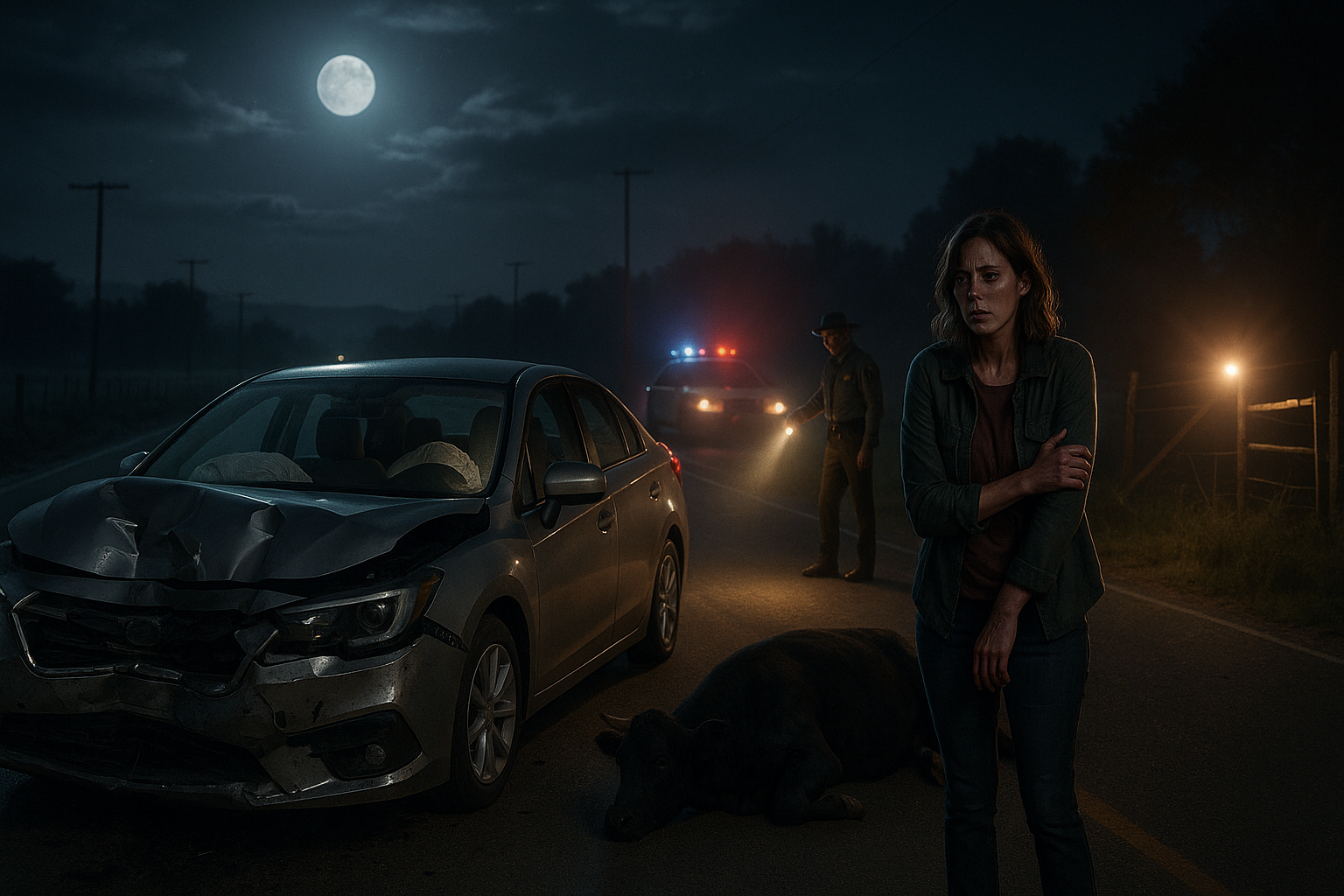
- At night on an unlit state highway, a driver collides with a black cow, sustaining severe injuries and total vehicle loss.
- Investigation finds broken fencing and prior escapes reported to the farmer.
- Local range rules indicate a closed‑range area; statutes and practice FAQs support owner responsibility in these conditions.
- Evidence includes police/animal control reports, ear tag data, neighbor testimony, and photos of fence damage.
- Farm liability insurance tenders policy limits; additional farm/ranch coverage is explored per agricultural practice guidance.
- Livestock road accident compensation is significant due to catastrophic injuries and long‑term care needs.
Conclusion
Animal‑related crashes hinge on facts you can capture quickly: scene photos, fence/gate conditions, witness details, and official reports. After any car accident animal loose road incident, notify your insurer promptly, understand how comprehensive/collision and PIP/Med‑Pay may apply, and preserve every record that proves duty, breach, causation, and damages.
Because laws on animal control, fencing, and range rules vary by jurisdiction—and because comparative fault can change outcomes—consider speaking with a local attorney early, especially in cases involving livestock or public‑entity issues. Finally, report persistent animal hazards to local authorities to help prevent future harm.
Need help now? Get a free and instant case evaluation by Visionary Law Group. See if your case qualifies within 30-seconds at https://eval.visionarylawgroup.com/auto-accident.
FAQ
Can I sue if my pet ran into traffic?
It depends on whether another party’s negligence contributed to the crash. If you failed to reasonably control your pet, you may bear most or all liability; if a driver’s unreasonable speed or distraction caused the impact, liability may shift. See the pet ran in front of car crash claim section for evidence to evaluate.
Who pays if a stray dog caused a crash?
Your comprehensive or collision coverage and PIP/Med‑Pay usually pay first. If an owner is later identified and negligent, their liability insurer may reimburse or contribute—see coverage sequencing and owner‑unknown options in this guide.
Are farmers automatically liable when you hit a cow?
No. Liability turns on local open‑range/closed‑range rules, fencing duties, and owner knowledge. Some statutes impose strict or near‑strict liability for livestock on certain roads; see duty frameworks and examples in practice FAQs.
What evidence will win my claim?
Police and animal control reports, photos/video of the animal and scene, witness statements, vet/repair/medical bills, and proof of owner control failures (open gates, broken fencing, prior escapes) are key. Organize records early and preserve dashcam/black‑box data where available.
This post provides general information—not legal advice; consult an attorney licensed where the crash occurred.