Table of Contents
Estimated reading time: 18 minutes
Key Takeaways
- Crashes that occur during or near police activity involve special rules on public-entity liability and “emergency privileges,” so proving negligence requires focused evidence and fast action.
- California follows comparative fault: your compensation is reduced by your share of blame, which makes clear documentation of what officers and drivers did at each moment critical.
- Government claims have short deadlines (often six months) before any lawsuit—missing them can end your case.
- Bodycam/dashcam, dispatch logs, and an escort or checkpoint plan can make or break a claim involving police presence.
- If a city, county, or state agency is involved, expect defenses like discretionary-act immunity, “sudden emergency,” and comparative fault; counter with due‑regard evidence, policy deviations, and witness/video proof.
TL;DR: If you were involved in an accident during police escort California situations require quick action: get medical care, document the scene (photos, video, witness names), and get the police report number (see guidance on police pursuits and immunities from the Dolan Law Firm, public-entity liability from Napolin Law, and ambulance/police crash claims from Victims Lawyer). Because public‑entity rules and immunity can change who’s responsible, contact a lawyer experienced with crash claims near police activity as soon as possible. Act fast due to common six‑month government claim deadlines noted by Maison Law—and consider getting crash near traffic stop legal help.
Drivers, passengers, and bystanders injured during a police escort, traffic stop, or checkpoint face unique legal issues. This guide explains who may be liable when a crash happens during or near police activity (escorts, traffic stops, checkpoints), what evidence matters, and practical timelines for California claims. If you’re navigating a liability crash with police presence after an injury crash during traffic checkpoint operations, this article offers plain‑English help—not legal advice—and links to credible resources. Public-entity rules and emergency-vehicle privileges often shift how fault is analyzed, which is why many of these cases turn on specialized evidence and short deadlines, as explained by Napolin Law and Maison Law.
Why police-involved crashes are different
Negligence means a party owed a duty of care, breached it, and that breach caused injury or damage. California reduces recoverable damages by the injured person’s percentage of fault (for example, if you’re 30% at fault, your damages are reduced by 30%). When a police officer or municipal vehicle is involved, special government‑immunity rules and emergency‑vehicle privileges can limit or bar claims against officers or municipalities—yet reckless conduct and lack of “due regard for safety” can still create liability during a liability crash with police presence.
For example, an officer driving on an emergency call may exceed speed limits under emergency‑response privileges, but must still exercise due regard for safety. If that standard is not met, liability may attach, even amid pursuit or escort conditions, as discussed by the Dolan Law Firm’s police pursuit analysis and by public‑entity overviews from Napolin Law and Victims Lawyer.
Key questions we’ll answer
- Who pays if a crash happens during a police escort or near a traffic stop?
- How do government immunities affect my ability to recover?
- What evidence proves fault with police present?
- What are the deadlines and next steps?
- When should I get crash near traffic stop legal help?
How California law treats crashes with police involvement
California uses negligence law: to win you must show duty, breach, causation and damages. In an accident during police escort California or a crash that occurs near police activity, these elements remain the same, but proof often hinges on specialized government and video records.
Comparative fault can reduce your recovery, so precise fact‑gathering matters. Example: if medical bills and lost wages total $100,000 and you’re found 30% at fault, your recoverable amount is $70,000. The clearer the evidence shows others’ responsibility—whether a private driver cut into the procession or an officer failed to use due regard—the stronger your damages claim.
Suing a private driver typically means filing a standard insurance claim; the insurer defends and pays up to policy limits. Suing a police officer or municipality is different: you must generally fit within exceptions to public‑entity immunity. California Government Code §815 and §820.2 (discretionary‑act immunity) are commonly raised defenses, while Vehicle Code principles give emergency vehicles traffic‑law privileges only when used with due regard for safety. Legal editors should confirm exact code citations in the final draft. Resources explaining these concepts include Napolin Law’s public‑entity liability overview, Dolan Law Firm’s pursuit discussions, Maison Law’s emergency‑vehicle guidance, and Victims Lawyer’s police crash claims page.
Vehicle Code concepts (often summarized as §§17004/21056) mean emergency vehicles may exceed certain traffic rules while responding, but they still must use due regard for safety; failure to do so can be evidence of negligence. Courts often weigh whether the officer’s actions were reasonable given the emergency and whether public‑entity immunities apply—this is where “liability crash with police presence” analysis becomes very fact‑specific. Again, have a California attorney confirm and cite the precise statutes.
Typical liability scenarios
Accident during police escort California
- Escort examples include funerals, VIP or official movements, evacuations, parades/processions, and police‑escorted oversized loads.
- Officers may direct the procession and traffic; escorted drivers must generally follow procession rules. If direction or planning is negligent, the agency may face liability.
- Vicarious liability means a municipality can be liable for officer negligence within the scope of employment (Gov. Code §815.2 concept—editor to confirm citation in final draft).
- Evidence can include the escort plan, traffic control decisions, and any lead/follow unit dashcam.
- See discussions of pursuit and emergency driving standards at the Dolan Law Firm and city/agency liability issues covered by Victims Lawyer.
Because an accident during police escort California can involve both private drivers and an agency’s operational choices, expect a careful split of fault and an early push to secure video and dispatch logs.
Crash near traffic stop legal help
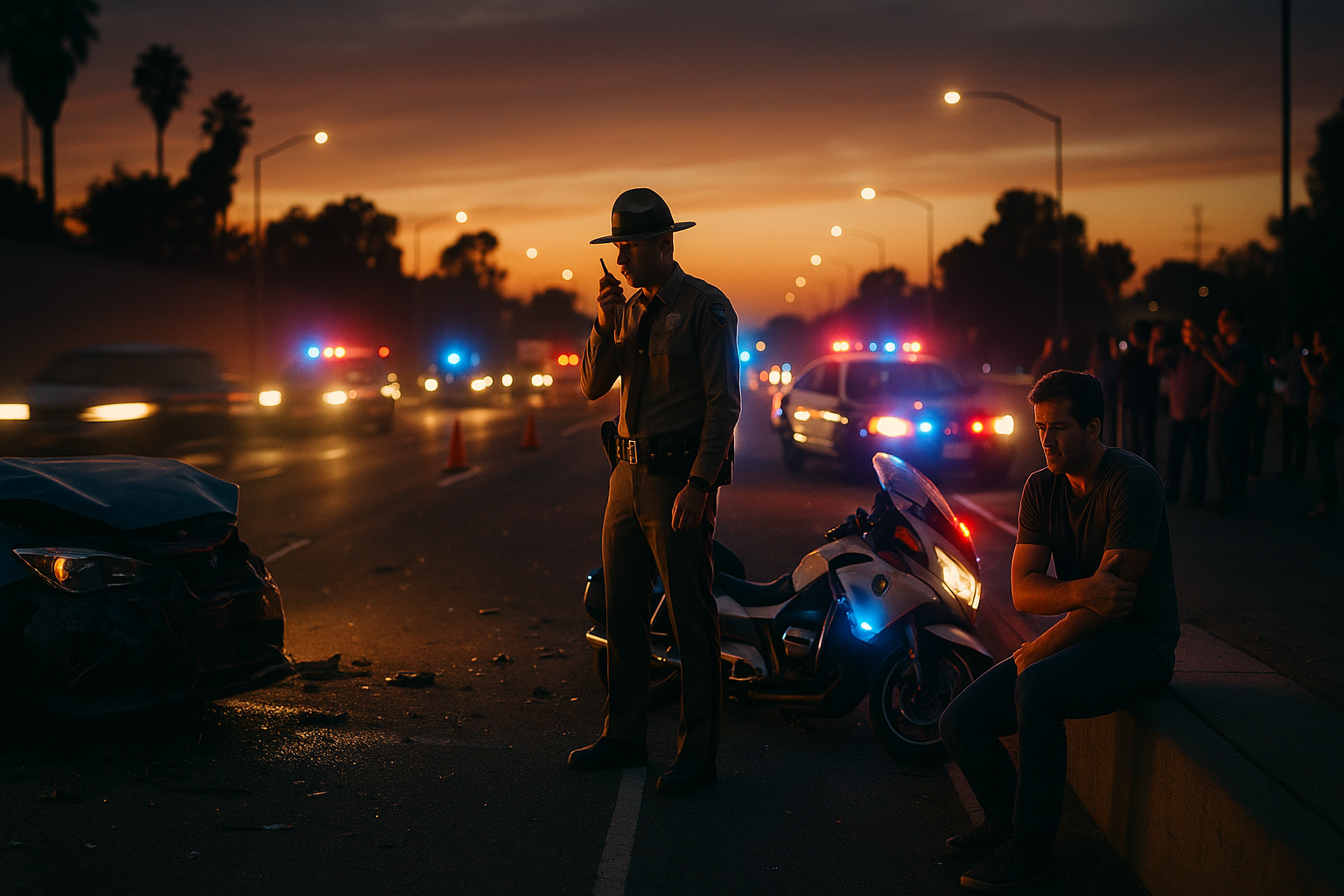
- Common patterns: rear‑ending a car already pulled over, secondary collisions as an officer stands near a driver’s door, or blind‑spot strikes when a vehicle merges away from a stop.
- Get crash near traffic stop legal help when fault is disputed, injuries are serious, multiple vehicles are involved, or key footage (dashcam/bodycam) might be missing.
- What a lawyer evaluates: officer positioning, lighting/signage/cones, instructions given, and video from patrol vehicle and nearby drivers.
- Learn more about gathering proof and insurer tactics from Crown & Stone’s police‑involved crash guidance.
Liability crash with police presence
- Potentially liable parties include: other private drivers; the officer (rare, typically via the employing agency); the municipal employer under vicarious liability; and contractors if road work or permitted closures contributed.
- Causation requires showing police actions were a substantial factor in the crash and that harm was foreseeable given the circumstances.
- Expect defenses invoking discretionary immunity; counter with policy deviations, lack of due regard, and concrete evidence.
- See public‑entity liability discussions at Napolin Law and police crash claims overviews at Victims Lawyer.
Hit during law enforcement escort claim
- If the escort leader or traffic control acted negligently (e.g., unsafe lane closures, poor timing through intersections), an agency claim may be possible.
- If another private driver caused the collision, a standard insurance claim against that driver is typical.
- Escort‑specific evidence: the operation plan, permits, CAD/dispatch records, radio communications, and dashcam from lead and follow units.
- Emergency‑driving standards and the limits of immunity are explained by the Dolan Law Firm and Maison Law.
Police lights accident liability CA
- Mechanisms include distraction or temporary blindness from lights, sudden police braking/positioning, and drivers pulling over unpredictably.
- Legal focus: foreseeability and due regard—were the lights and vehicle placement appropriate for conditions, and were motorists reasonably warned?
- Evidence: photos capturing light placement/brightness and angles, visibility statements from witnesses, and dashcam showing the lighting environment.
- For more on agency liability and police lighting hazards, review Victims Lawyer’s police crash claims and Crown & Stone’s police‑involved accident overview.
In many police lights accident liability CA claims, careful scene photography and quick preservation of patrol vehicle video are decisive.
Injury crash during traffic checkpoint
- Checkpoint scenarios: DUI or safety checkpoints, temporary lane closures and cones, and stop‑and‑go bottlenecks.
- Legal theories may include a dangerous condition of public property, negligent planning or signage, or failure to warn motorists.
- Evidence: written checkpoint plan and permits, cone/signage layouts, dispatch logs, and officer training/briefing memos.
- Checkpoint liability and public‑entity claims are outlined by Napolin Law.
Evidence to collect at the scene and preserve later
At‑scene actions
- Seek medical care immediately; document initial injuries and treatment (ER notes, ambulance reports). Guidance on police‑involved crashes from Crown & Stone and emergency‑response crash claims from Victims Lawyer explain why early records matter.
- Photograph vehicle damage, resting positions, skid marks, debris, all traffic‑control devices, and police vehicle positions—capture visible police lights to support police lights accident liability CA allegations.
- Record short video walking the scene that shows patrol lighting patterns, siren use (if any), and traffic flow; preserve your dashcam/phone video files.
- Collect names and contacts for civilian witnesses; get officer names, badge numbers, contact info, and the police report number.
- Note weather, lighting, visibility, signage, lane closures, and whether lights/sirens were in use.
- Mark approximate distances/orientations in a simple scene sketch, including turn lanes, merge points, or cone tapers.
- Preserve the damaged vehicle before repairs if possible, and consider black box (EDR) data retrieval if speed/braking are disputed.
- If no officer responds or the report is delayed, follow a structured approach to a no police report car accident claim.
Documents to obtain
- Police report: request it online or at the agency’s records division; your report number from the scene speeds this up. For a step‑by‑step approach, see why a California police report matters and how to use it.
- EMS/ambulance records and hospital charts, including imaging and lab results.
- Any traffic citations issued and any officer written statements.
- Vehicle repair estimates, invoices, and rental car receipts.
- Reference for officer report structure: CHP’s statewide report manual (CHP 555 manual).
Records to request via formal channels/subpoenas
- Body‑worn camera (BWC) and patrol car dashcam video—often decisive to show officer actions and light/siren usage.
- Dispatch logs and 911/call recordings—establish timing and instructions.
- Training records and departmental policies for escorts/checkpoints—prove deviations from standard practice.
- Written checkpoint or escort plans, permits, and any inter‑agency communications or advisories.
- Public-records guidance and preservation steps appear in Crown & Stone’s article and Maison Law’s emergency‑vehicle guidance.
Preservation best practices
- Have an attorney send a spoliation/preservation letter immediately to the agency. Sample opening: “Please preserve all video, audio, dispatch logs, and related records concerning the incident on [date] at [location] involving [names/units].”
- Document when each public records request was made and keep copies of delivery receipts.
- If you need help interpreting or pursuing police records, review practical guidance on understanding and using police reports—and consider early counsel if you need crash near traffic stop legal help.
Filing claims: insurer steps and government claims
Follow a firm order to avoid missteps and protect your claim value:
- Notify your own insurer promptly according to your policy’s timeframes; record the claim number.
- If a private driver is at fault, open a third‑party claim with that driver’s insurer and provide the police report and medical documentation.
- If a city, county, or state agency may be at fault, present an administrative government claim (often called a “claim for damages”) before any lawsuit. The commonly cited deadline is six months—see Maison Law for timeline orientation.
- Track agency responses: agencies generally have 45 days to accept or deny. If denied, or no response is issued, you may be able to file suit.
Practical cautions:
- Do not give recorded statements to other parties’ insurers without counsel.
- Save all receipts: medical bills, prescriptions, out‑of‑pocket mileage, repair/rental costs, and wage loss records.
- Expect defenses claiming “emergency privileges,” comparative fault, or that the officer acted within discretion. Comparative‑fault insights appear in our primer on California comparative fault accidents.
- If your crash involves a police unit responding emergently, consider this parallel guide on an accident with an emergency vehicle in California—the law treats those differently from standard crashes.
- More claim‑process tips are collected in Crown & Stone’s police‑involved accidents article and Maison Law’s emergency‑vehicle crash guide.
Damages available in police-involved crash claims
Economic damages
- Medical bills: ER/hospital care, surgery, physical therapy, prescription medications; organize bills and medical records.
- Future medical care: costs for ongoing treatment, durable medical equipment, and surgery—support with treating‑provider opinions and life‑care planning where needed.
- Lost wages and lost earning capacity: pay stubs, employer letters, and vocational expert reports can substantiate work impact.
- Property damage: repair/total loss valuations, diminished value, towing/storage, and rental car receipts.
Non‑economic damages
- Pain and suffering: compensates the physical pain and emotional harm from the crash. Valuation may use multiplier or per‑diem methods (and varies by case).
- Emotional distress and loss of consortium: addresses anxiety, depression, PTSD‑type symptoms, and the impact on close relationships.
If you were hit during law enforcement escort claim operations, be sure your damages narrative explains how escort‑specific traffic control or timing exposed you to risk. For an injury crash during traffic checkpoint, document whether inadequate signage or lane control worsened impact forces or recovery needs—these facts connect liability to your losses.
Punitive damages
Punitive damages punish particularly wrongful conduct and require a high burden of proof (malice, oppression, or fraud). They are rarely allowed against public entities, so speak with counsel about whether your facts support such a claim. See Napolin Law’s overview for public‑entity considerations.
Common defenses the police or city will raise
- Qualified immunity / discretionary‑act defense (Gov. Code §820.2 concept): shields officers for discretionary decisions absent gross negligence. Counter with evidence of reckless behavior, failure to follow training, or policy gaps. See Napolin Law.
- Public duty / sovereign immunity: argues no duty is owed to any individual beyond general public protection. Counter by showing a special duty or statutory exception and agency‑created hazards. See Victims Lawyer.
- Comparative fault: claims you or a third driver are also to blame; reduce exposure by leaning on independent witnesses, dashcam, and EDR proof that align with roadway rules. See Napolin Law.
- Sudden emergency: asserts the officer faced immediate peril and acted reasonably. It does not apply if the officer’s negligence created the emergency. Pursuit‑related emergency discussions appear at the Dolan Law Firm.
Use these defenses to structure your evidence plan. For example, to counter a police lights accident liability CA defense, gather photos and video proving lighting angles, glare, and inadequate warnings relative to traffic speed and density. To defeat generalized “emergency” defenses in a liability crash with police presence, map policy requirements to what the officer actually did, minute‑by‑minute.
Timing, deadlines, and a checklist of next steps
Immediate (at-scene & first 24–48 hours)
- Get medical care and keep medical records and discharge instructions.
- Photograph the scene (vehicles, skid marks, police lights), and take short video clips.
- Get the police report number, officer names/badges, and witness contacts.
- Notify your auto insurer; know your policy deadlines and coverage.
- Record a short personal timeline while memories are fresh; back it up and preserve phone metadata.
Short‑term (days–weeks)
- Request the police report and public records (BWC/dashcam and dispatch logs).
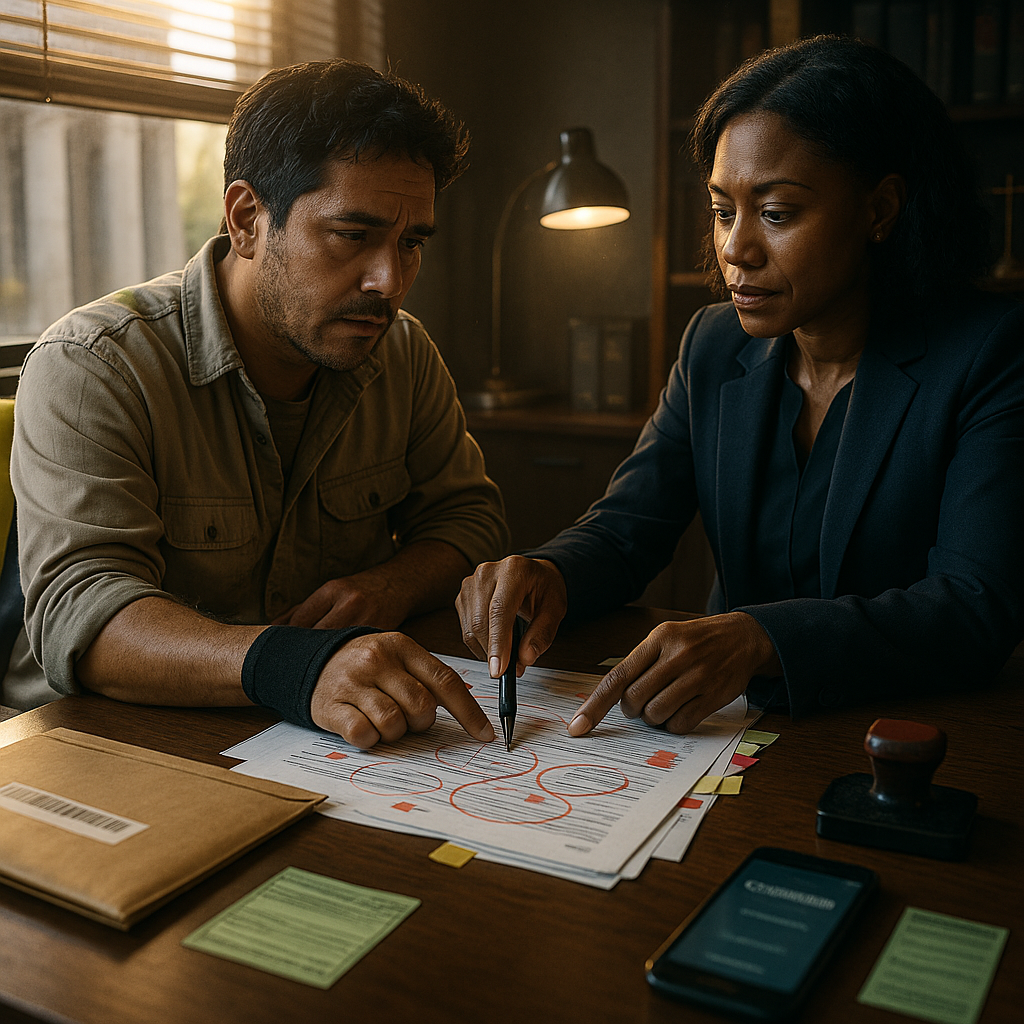
- Consult an attorney experienced with public‑entity claims and preservation demands.
- Send preservation/spoliation letters via counsel to the agency and other parties.
Deadlines
- Administrative government claim: commonly six months to present a claim to the agency; see timeline summaries at Maison Law.
- Civil suit statute of limitations: commonly two years for personal injury in California—verify exact dates with counsel, and review a primer on the car accident statute of limitations in CA.
When to hire a lawyer
- Serious injury or wrongful death, multi‑vehicle collisions, missing/withheld video, disputed fault, or when public‑entity liability is suspected.
- If you’re pursuing a hit during law enforcement escort claim or need crash near traffic stop legal help, early counsel is vital to secure video and meet notice deadlines.
How an attorney can help you after a police‑involved crash
- Evaluate liability and damages quickly and give you a realistic SWOT (strengths/weaknesses) of the claim.
- Prepare and file the administrative government claim before the deadline and track the 45‑day response window.
- Draft and serve preservation letters; file public records requests; subpoena BWC/dashcam and dispatch logs.
- Retain experts (accident reconstruction, medical, vocational) to prove causation and future damages.
- Negotiate with insurers and municipal counsel; prepare complaints and litigate if necessary, including apportioning fault among multiple parties and handling indemnity claims.
- Learn about police/ambulance crash outcomes and litigation value in resources from Victims Lawyer and Maison Law.
If your case involves a liability crash with police presence, counsel can also advise on strategic use of EDR (“black box”) data, red‑light camera video, or traffic light footage to corroborate speed, timing, and visibility.
Examples: how fault might be apportioned
Scenario 1: Rear‑ender at a traffic stop
Facts: A vehicle is stopped legally on the shoulder for a traffic stop; an approaching driver fails to slow and rear‑ends it while officer lights are active but ambient lighting is poor.
Likely outcome: Primary fault on the rear‑ending driver (e.g., 80%) with possible minor municipal fault (e.g., 20%) if inadequate cones or lighting contributed; evidence needed includes photos showing sightlines, witness statements, and the police report. See analysis tips from Crown & Stone and public‑entity considerations at Napolin Law. If this happened in an escort context, it may also align with an accident during police escort California analysis.
Scenario 2: Multi‑vehicle crash after police sudden braking
Facts: A pursuing officer brakes suddenly without activating lights/siren; a chain‑reaction crash follows.
Likely outcome: Agency liability if due regard was lacking; dashcam, BWC, and dispatch logs help prove absence of siren/notice. See pursuit standards and emergency privileges discussed by the Dolan Law Firm and public‑entity claim contours from Victims Lawyer. Issues of police lights accident liability CA and liability crash with police presence commonly arise in this scenario.
Scenario 3: Escort procession collision
Facts: The city directs a procession through lane closures without adequate warning signs; a third‑party driver collides with the procession.
Likely outcome: Vicarious liability and dangerous condition theories may attach to the city; file a government claim before suit. See Victims Lawyer and related deadline guidance at Maison Law. This is a typical fact pattern for a hit during law enforcement escort claim and is analogous to an injury crash during traffic checkpoint case where signage and planning are central.
Resources and where to get help
- Dolan Law Firm — police pursuits & crashes: emergency‑driving privileges, “due regard,” and pursuit risks that often arise in a liability crash with police presence.
- Napolin Law — suing police for car accident liability: public‑entity immunities, discretionary‑act defenses, and claim structure.
- Victims Lawyer — ambulance and police crash claims: evidence checklists and claim theory for crashes during or near police operations.
- Crown & Stone — police‑involved car accidents: practical steps after a police‑involved crash and insurer considerations helpful when seeking crash near traffic stop legal help.
- Maison Law — emergency vehicle crash guidance/deadlines: timelines for government claims and lawsuit filing.
- NHTSA/CHP manual — California collision report (CHP 555) structure: understand how reports are built and what to look for when reviewing officer narratives and diagrams.
Editorial note for legal review: A California‑licensed legal editor should add precise citations and links to official California legislative pages for Vehicle Code §§17004/21056; Government Code §§815/820.2; and Government Code §§910–915 (claims process), plus any local government claims guidance relevant to your jurisdiction.
Conclusion
Crashes that happen during police escorts or near traffic stops raise special legal issues—act quickly to preserve evidence and meet deadlines. If you were injured in an accident during police escort California, contact a lawyer experienced with government claims for a free consultation; for many, the best first step is to seek crash near traffic stop legal help.
This post is informational only and not legal advice; consult a California-licensed attorney to confirm deadlines and statutory details.
Need help now? Get a free and instant case evaluation by Visionary Law Group. See if your case qualifies within 30-seconds at https://eval.visionarylawgroup.com/auto-accident.
FAQ
Can I sue police if their lights caused the crash?
Potentially yes—if you can show the officer acted recklessly or without due regard for safety; immunity can be overcome in those cases. See Victims Lawyer’s police crash claims and Crown & Stone’s discussion on police lights accident liability CA.
How do I get police dashcam or bodycam footage?
Request it via public records (PRA) and, if needed, have an attorney subpoena or use litigation preservation demands—act quickly to prevent deletion. See Crown & Stone and Maison Law for steps, and consider crash near traffic stop legal help when agencies resist.
What if the officer was responding to an emergency?
Emergency privileges exist, but they do not protect reckless conduct; the key is whether the officer used “due regard.” Pursuit and emergency‑driving limits are covered by the Dolan Law Firm and similar sources analyzing a liability crash with police presence.
How long do I have to file a claim?
Typically six months to present a government claim and about two years for an injury lawsuit, but verify with counsel. See deadline overviews at Maison Law and review California’s statute of limitations in CA—especially if your case involves an injury crash during traffic checkpoint.
Should I accept the insurer’s first offer?
Usually not without counsel—early offers are often low. Collect complete medical, wage, and repair records and consider crash near traffic stop legal help to evaluate value; see practical tips in Crown & Stone’s guidance.