Table of Contents
Estimated reading time: 18 minutes
Key Takeaways
- Asking thorough questions helps evaluate the attorney’s experience, communication, fees, strategy, and case outcomes.
- Bringing complete documentation to your consultation enhances the attorney’s ability to assess your claim accurately and efficiently.
- Understanding the claim process and attorney communication expectations prepares you for a smoother legal experience.
- Setting clear timelines and communication guidelines aids in managing your expectations throughout the case.
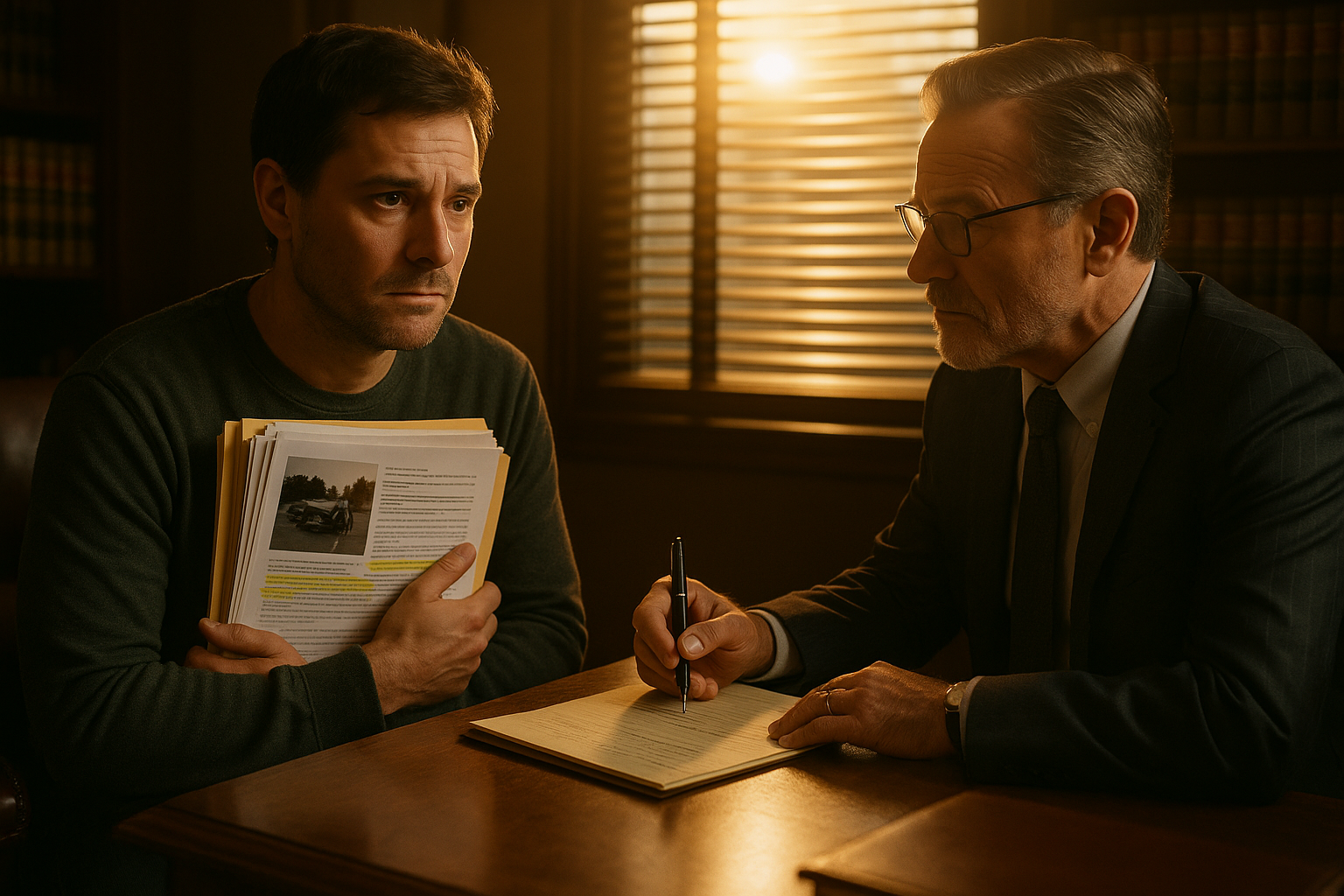
Knowing the right questions to ask a car accident attorney is crucial for anyone about to begin the personal injury claim process. If you or a loved one has been involved in a car accident, you may be overwhelmed by the claims process, medical bills, and recovering from injury—all while trying to pick the right legal representation. This blog will equip you with detailed, actionable advice on essential questions to ask during your consultation, what to bring to a personal injury consultation, and what to expect from your attorney.
Our goal is to help you maximize your first meeting with a car accident lawyer. You’ll be prepared, informed, and ready to select the attorney best qualified to handle your case. Research shows that being well-prepared increases your ability to choose appropriate legal counsel and can lead to stronger case outcomes (Dongaline).
Key Questions to Ask a Car Accident Attorney
Choosing the right attorney for your auto accident claim starts with asking the right questions. Thorough questions help you evaluate the attorney’s competence, experience, and overall fit for your case. This enhances your ability to make an informed decision about your personal injury claim.
Why Key Questions Matter
- They uncover the attorney’s experience with similar cases.
- They clarify expectations around communication, fees, and case strategy.
- They help you spot red flags and ensure transparency.
- They empower you as a client—making sure you understand how lawyers handle car accident claims and your role as the case progresses.
Essential Questions to Ask
1. What experience do you have with cases similar to mine?
- Why ask this: Every accident and injury is unique, but attorneys with depth in your kind of accident or injury are more equipped to anticipate challenges and navigate precedent.
- What to look for: Attorneys should cite past results with similar fact patterns, such as rear-end collisions, multi-vehicle crashes, or specific injury types like whiplash or traumatic brain injury.
- Supporting evidence: An attorney’s relevant case experience can increase your confidence in their ability to handle your specific situation (1800thelaw2, Dongaline).
2. What is your success rate in car accident cases?
- Why ask this: You want to know how effective your attorney is at resolving cases favorably—via either settlement or litigation.
- What to look for: Specific numbers, references, or statistics about past wins, settlements, and judgments. Watch for transparency; an attorney should candidly share both strengths and honest challenges.
3. How do you structure your fees, and what payment options are available?
- Why ask this: Many personal injury lawyers charge on a contingency basis (no fee unless you win), but always clarify. You don’t want surprises about costs.
- Fee structures may include:
- Contingency fees: A percentage of the settlement or court award.
- Hourly fees: Rare in car accident cases, but possible.
- Flat fees: Occasionally used for basic services.
- Ask: Who covers litigation expenses if you lose?
- Related reading: Learn more about how contingency fee lawyers are paid in car accident claims.
4. What strategy do you plan to use for my case?
- Why ask this: Understanding the attorney’s initial approach provides insight into how they tackle evidence gathering, negotiations, and the possibility of trial.
- What to look for: A clear, thought-through outline that takes into account your injuries, available evidence, and likely insurance coverage. Transparency in strategy is a marker of client-focused legal counsel.
5. What are the likely outcomes and potential challenges?
- Why ask this: No lawyer can guarantee results, but you need realistic expectations about settlement amounts, possible compensation limits (like insurance policy maximums), and the likelihood of litigation.
- What to look for: An honest discussion of risks and weaknesses, along with the strengths of your case (1800thelaw2, Dongaline).
6. How do I choose the right car accident lawyer to maximize my compensation?
- Why ask this: Picking an attorney with the right expertise and track record can have a direct impact on your settlement or verdict.
- What to look for: Attorneys who specialize in auto accident cases, have high success rates, and offer clear contingency fee arrangements.
- Further guidance: For a detailed approach, see our post on how to choose a car accident lawyer to maximize compensation.
Summary: Why Asking These Questions Matters
- Client understanding: You gain a true picture of what the attorney offers and how they approach car accident claims.
- Transparency: Open communication about fees, results, and process builds trust and avoids surprises.
- Empowerment: You have the information needed to select the best advocate for your recovery.
References:
1800thelaw2
Dongaline
What to Bring to a Personal Injury Consultation
Being thorough in what to bring to personal injury consultation maximizes the productivity of your first meeting. It enables the attorney to assess your claim promptly and provide tailored advice.
Why Complete Documentation Is Essential
- Helps the attorney quickly evaluate liability and damages.
- Ensures no time is wasted tracking down key information later.
- Enhances accuracy of legal advice.
Personal Injury Consultation Checklist
Below is a detailed checklist. Bring both originals and copies, neatly organized, to your meeting for best results.
1. Accident/Police Report
- Purpose: Provides the foundation of your claim. Police and incident reports document who was involved, the date and time, insurance information, citations, and officers’ initial impressions.
- Evidence shows: Attorneys rely on these reports to confirm facts and assess liability (Costello Law Firm, Findlaw).
2. Medical Records
- Purpose: Vital for demonstrating the extent of injuries and treatments to date. Include ER admission forms, discharge summaries, medical bills, doctor’s notes, and records of ongoing treatment.
- Why this matters: Documented injuries and medical care form the basis of your injury damages (Costello Law Firm).
3. Insurance Information
- What to bring: The declarations page from your auto insurance policy, claim numbers, and all correspondence from your own insurer and the other driver’s insurance company.
- Why it matters: Attorneys need these details to assess available coverage, liability limits, and subrogation issues (Costello Law Firm).
4. Photos and Videos
- Bring: Clear photos or video of the accident scene, vehicle damage, roadway conditions, weather, visible injuries, and anything that helps explain how the accident happened.
- Why this is valuable: Visuals support the narrative, clarify circumstances, and bolster the credibility of your claim (Costello Law Firm, Findlaw).
- Extra resource: For more on gathering evidence, see our post on how to gather evidence after an auto crash.
5. Witness Contact Information
- Provide: Names, addresses, phone numbers, and brief notes about what each witness observed.
- Why it matters: Witnesses may provide independent perspectives to confirm your account or fill in gaps (Costello Law Firm, Findlaw).
6. Accident-Related Correspondence
- Include: Any letters, emails, or texts exchanged with insurance adjusters, the at-fault driver, or witnesses.
- Why this matters: Communication history can reveal offers, admissions of fault, or negotiation attempts (Costello Law Firm).
Tips for Organization
- Gather all items in a folder or binder.
- Make an itemized list for easy reference.
- Be honest about missing information—your attorney can advise how to collect it.
References:
Costello Law Firm
Findlaw
How Lawyers Handle Car Accident Claims
Understanding how lawyers handle car accident claims helps clients anticipate what the process will look like day-to-day. This knowledge also forms the basis for several questions to ask a car accident attorney about how your case will be managed.
Step-by-Step Overview of the Car Accident Claim Process
1. Investigation
- The attorney starts by collecting all available evidence, including police reports, accident scene photos, damage assessments, and medical documentation.
- They may visit the accident site or work with accident reconstruction specialists as needed.
2. Identifying Liable Parties
- Lawyers analyze evidence to determine all responsible parties, including individuals, corporations, and potentially government entities.
3. Gathering Evidence
- Your legal team compiles additional documentation—such as expert testimony, additional witness statements, or surveillance video—to support your version of events.
- They’ll also retrieve or subpoena medical records and accident reports not in your possession.
4. Communication with Insurance Companies
- Attorneys manage all correspondence and negotiations with insurance companies—reducing the risk that you inadvertently harm your own claim.
- They review all communication from adjusters and draft responses to protect your interests.
5. Negotiation
- Most claims are resolved here. Your lawyer consults with you regularly regarding settlement offers, the strength of the evidence, and the pros and cons of accepting early offers.
- Attorneys use evidence and case law to justify higher settlements for injury, pain, lost wages, and long-term needs.
6. Settlement or Litigation
- If the insurer refuses a fair settlement, the attorney files suit, initiating the litigation phase.
- They handle all pretrial motions, court filings, discovery, depositions, and (if necessary) trial presentation.
- At each stage, your lawyer advises you on the merits of settlement versus continuing the case.
Further reading: To dive deeper into the overall process, see our comprehensive guide on mastering the auto accident claim process.
Impact of Attorney Approach
- Attorneys with a systematic, proactive strategy typically achieve better client outcomes.
- Clear communication and detailed preparation at each stage increases the odds of fair compensation.
References:
Dongaline
Lawyer Communication Expectations
Clear lawyer communication expectations are the bedrock of a smooth attorney-client relationship during your car accident claim. This includes the frequency and method of updates, who will be your main point of contact, and how you should reach out with questions.
Why Lawyer Communication Is Critical
- Prevents uncertainty and anxiety about your case.
- Ensures you are informed about key milestones—such as settlement offers, court dates, or negotiation developments.
- Enables faster resolution of your concerns and clarifies next steps at every stage.
Communication Practices and What to Expect
- How often will you receive updates?
Ask in your consultation how frequently the attorney will check in—with some firms providing weekly or bi-weekly updates, and others reporting only when major developments occur. - What’s the preferred communication method?
Get clarity whether emails, phone calls, a client portal, or text messages are most appropriate. - Who is your main point of contact?
Sometimes a paralegal or case manager handles day-to-day communication; verify if that’s the case. - How are urgent matters handled?
Learn the protocol for emergencies or last-minute developments.
Setting and Maintaining Expectations
- Discussing communication in your first meeting helps avoid misunderstandings later.
- Make sure “lawyer communication expectations” is on your list of questions to ask a car accident attorney—proactive transparency is a good sign from a legal team.
Reference:
Dongaline
What to Expect When You Hire a Crash Attorney:
For more on initial expectations, check out our guide on what to expect when you hire a crash attorney for your case.
Timeline to Expect from Legal Team
Every personal injury case is unique, but understanding the general timeline to expect from your legal team helps set realistic expectations. Make sure to specifically ask your lawyer about anticipated timeframes—this is one of the critical questions to ask a car accident attorney.
Standard Timeline for a Car Accident Claim
1. Initial Consultation:
– Usually scheduled within days of contacting the attorney.
– Immediate assessment of your situation, legal rights, and next steps.
2. Investigation and Evidence Gathering:
– Duration: Several weeks to a few months.
– Factors affecting timing: Complexity of the case, number of parties involved, medical treatment duration, and how quickly evidence can be collected.
3. Negotiation with Insurers:
– Duration: Weeks to several months.
– Variables: Cooperation from insurance companies, needed documentation, and back-and-forth over settlement offers.
4. Settlement or Litigation:
– Settlement: Some cases settle in a few months if liability and damages are clear and the insurance company is responsive.
– Litigation: Cases that go to court can take a year or longer due to court schedules, discovery, and trial preparations.
Key Factors Impacting Your Case Timeline
- Case complexity: Disputed liability, multiple injured parties, longstanding medical treatments, and unclear evidence extend the timeline.
- Availability and volume of evidence: Fast collection speeds the process; missing items can cause delays.
- Court backlog: Some jurisdictions have heavy caseloads, which can increase time to trial.
- Insurance company behavior: Resistant adjusters and lowball offers can drag out negotiations.
What You Should Ask Your Attorney
- What is the expected “timeline to expect from your legal team” in a case like mine?
- What specific factors could cause delays?
- How will I be notified about important milestones or changes in strategy?
Reference:
Dongaline
Conclusion: Get the Most from Your Consultation
Coming to your initial consultation with the right questions to ask a car accident attorney and all relevant documentation sets the stage for a successful attorney-client relationship—and a stronger case outcome. By being organized and informed, you better understand how lawyers handle car accident claims, can set clear lawyer communication expectations, and are prepared to track the timeline to expect from your legal team.
Action Steps:
- Gather all documents on the “what to bring to personal injury consultation” checklist.
- Compile your list of personalized “questions to ask a car accident attorney,” covering experience, results, fees, strategy, communication, and timing.
- Approach your first meeting with confidence, prepared to find a legal team that meets your needs.
For the best chance at a fair and fast recovery, start by getting answers from firms with a proven track record.
Ready to see if your case qualifies?
Get a free, instant case evaluation with Visionary Law Group.
Find out if you qualify in 30 seconds at https://eval.visionarylawgroup.com/auto-accident
References:
Costello Law Firm
1800thelaw2
Dongaline
FAQ
What documents should I bring to my personal injury consultation?
Bring originals and copies of your accident/police reports, medical records, insurance information, photos and videos of the accident, witness contact information, and any accident-related correspondence. This helps your attorney quickly assess your claim.
Why is it important to ask about an attorney’s experience with similar cases?
Attorneys experienced with cases like yours are better equipped to anticipate challenges and navigate relevant precedent, increasing your chances of a strong outcome.
How do contingency fees work in car accident cases?
Many personal injury lawyers work on a contingency fee basis, meaning they only get paid if you win your case. The fee is a percentage of your settlement or court award, but always clarify any additional expenses involved.
What should I expect regarding communication with my lawyer?
You should clarify how often you’ll receive updates, the preferred communication methods, who your main contact will be, and how urgent matters are handled to ensure smooth communication throughout your case.
How long does a car accident claim usually take?
Timelines vary based on case complexity, evidence availability, and insurance company behavior. Some cases settle within a few months, while others may take a year or more if litigation is necessary. Ask your attorney for an estimated timeline specific to your case.