Table of Contents
Estimated reading time: 14 minutes
Key Takeaways
- An expert witness car accident claim is most impactful when liability is disputed, injuries are serious, or technical proof (like EDR “black-box” data) is needed.
- Top expert types include accident reconstruction, medical, biomechanical, human factors, and economics; each addresses a different piece of causation, liability, or damages.
- Expected costs vary widely: hourly rates often $200–$1,000+; total case costs commonly $3,000–$30,000+ when reports, depositions, and demonstratives are involved.
- If you’re asking “when is expert needed car crash case,” the rule of thumb is: clear fault/minor injuries rarely need experts; contested facts/serious injuries usually do.
Introduction
An expert witness car accident claim can fundamentally change the outcome of your lawsuit by clarifying complex causation, liability, and damages issues. Put simply, the right experts translate technical data into plain English so judges, juries, and insurers can see what really happened.
This guide explains how expert testimony affects case outcomes, when experts are necessary, the main types you may need—especially accident reconstruction expert testimony and a medical expert in injury lawsuit—what testimony looks like at trial, benefits of expert witness car accident, costs, how to choose an expert, and realistic examples. For background on how expert testimony shapes results, see discussions on the role of experts in auto cases from experienced litigators and a broad overview of when and why experts are needed.
Why expert testimony matters in car crash litigation
Define an expert witness as a practitioner with specialized training who offers opinion testimony beyond common knowledge to prove causation, liability, or damages. In car crash litigation, experts bring objective, measurable analysis to disputed facts.
What problems do experts solve?
- Pinpoint who caused the crash by aligning physics with physical evidence like tire marks and a debris field, as explained in detailed guides on expert roles.
- Assess vehicle speed, point of impact, visibility, and occupant kinematics to clarify pre-impact behavior and line-of-sight issues, a function highlighted in broader overviews of expert testimony and focused discussions about auto case experts.
- Link specific injuries to the collision rather than pre-existing conditions using clinical timelines and imaging, as described in medical causation sections within expert-witness explainers.
- Convert raw physical and digital data into persuasive evidence—e.g., EDR downloads, scene measurements, and simulations—mirroring best practices summarized by trial-tested practitioners.
- Challenge or corroborate opposing experts through method critiques or independent calculations, a key reason experts can “make or break” claims per practical litigation insights.
Evidence types experts analyze
Most crash experts review a mix of physical, digital, and documentary evidence:
- Scene photos, skid and yaw marks, gouges, and debris patterns.
- Event data recorder (EDR) “black-box” downloads and vehicle module logs.
- CCTV or dashcam footage and synchronized timelines.
- Vehicle crush profiles, final rest positions, and repair estimates.
- Medical records, imaging, and clinical notes for injury causation.
For a deeper dive into how these items are gathered and assessed, see our explainer on technology and methods in crash scene investigations.
Concrete disputes experts often resolve include:
- Disputed speed and braking distances validated against physical evidence and EDR, as illustrated in expert case examples.
- The exact point of impact, vehicle positions, and sequence of events, frequently reconstructed with surveying and cameras, as summarized in practical guides.
- Whether an injury is crash-related or degenerative, a recurring medical question addressed in expert witness resources.
- Economic losses (lost earnings, future care), quantified by economists, as explained in economic expert primers.
Real-world blogs further underscore how experts frame key issues and simplify complexity for jurors, see this additional perspective on expert witnesses in car accident cases. And for how reconstruction insights translate to legal arguments, explore our overview of accident scene reconstruction in legal judgments.
When is expert needed car crash case?
If liability is clear and injuries are minor, you probably do not need an expert; if facts are contested, injuries are serious, or technical evidence is required, an expert is likely essential, as emphasized in broad overviews of expert use and focused explainers about auto accident experts.
- Serious injuries or fatalities often require medical causation and prognosis opinions, a need discussed in expert-witness guides.
- Disputed causation or conflicting eyewitness accounts call for reconstruction and human factors analysis; see the how-and-when overview.
- Missing/unclear evidence (damaged scene, no surveillance) may require reconstruction to fill gaps, a core use case outlined by trial practitioners.
- Black-box/EDR data interpretation is technical and benefits from reconstructionists who routinely parse downloads, illustrated by EDR-focused case walk-throughs.
- Commercial vehicle or multi-vehicle pileups introduce complex dynamics and regulations, a scenario noted in expert role summaries.
- Comparative negligence disputes hinge on technical apportionments (speed, sight distance, reaction time), as explained in expert testimony overviews.
- High-value claims requiring detailed future care and earnings analyses rely on economic experts, covered by economist primers.
When to retain an expert
Retain experts as early as possible—sometimes before filing suit—to preserve evidence (vehicles, EDR/black-box data) and guide scene documentation. At the latest, hire before discovery closes so the expert can be deposed and disclosed properly, as urged by expert-witness counsel and hiring and preparation tips.
On first contact, ask the expert to help:
- Preserve EDR/black-box data with a formal preservation request.
- Photograph and measure the scene quickly, especially transient markings.
- Ensure vehicle preservation for inspection (don’t allow premature salvage).
- Collect complete medical records and imaging for a causation review.
For broader context on evidence capture and the value of expert input, see our guides to auto accident evidence collection and proving negligence with the right records.
Types of experts and what they do
Describe the primary expert categories used in car crash litigation and the specific opinions they provide. Each plays a distinct role: reconstructionists explain vehicle dynamics, medical experts address injury causation and future care, and financial experts quantify losses. Biomechanics, human factors, and safety engineers often fill in the gaps between how a crash unfolded and why it caused harm.
Accident reconstruction expert testimony
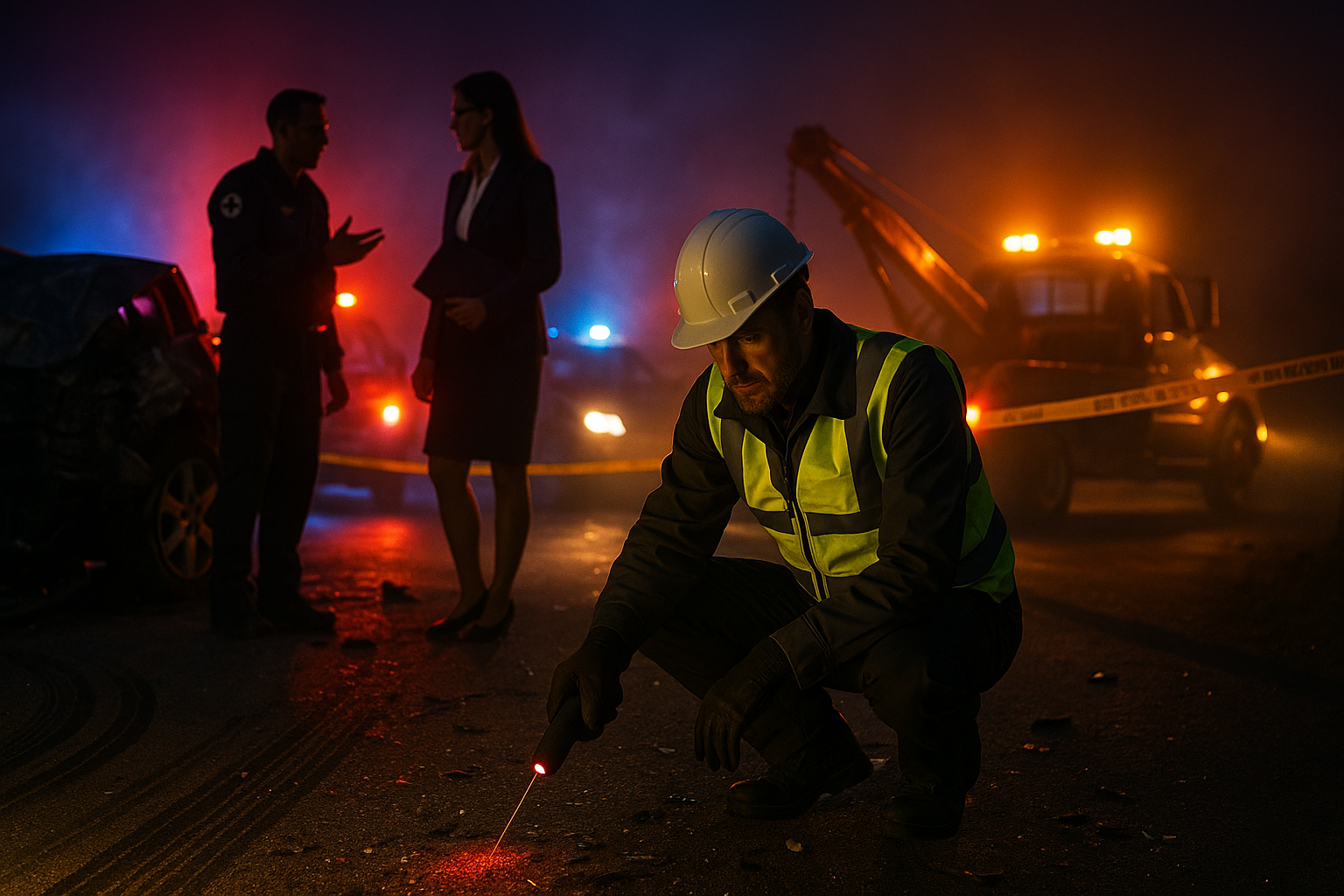
Accident reconstructionists apply engineering, physics, and scene evidence to recreate the collision dynamics and opine on speed, pre-impact actions, point of impact, and sequence of events. Their work is at the core of many disputed-liability cases, a foundational role discussed in expert overviews, practical guides, and case-focused examples of how reconstruction shifts outcomes.
Evidence they analyze includes:
- Scene photos, skid/yaw marks, gouges, and debris patterns.
- Crush profiles and final rest positions.
- EDR (black-box) downloads and diagnostic logs.
- CCTV/dashcam videos and synchronized time-stamps.
- Witness statements and police diagrams.
- Vehicle damage patterns and repair estimates.
Methods and tools:
- 3D laser scanning and photogrammetry create “point clouds” and precise measurements useful for later simulations and animations.
- Computer simulation/crash modeling (using crash-scene simulation software) tests competing hypotheses about speed, braking, and trajectories.
- Delta-v calculations estimate the change in velocity during impact; higher delta-v generally correlates with greater injury potential.
- Biomechanical modeling explores occupant kinematics—how forces move the body and can cause specific injuries.
- Animations and demonstratives simplify complex sequences for juries, transforming technical analysis into understandable visuals.
Reconstruction reports typically include the expert’s CV, methods, data sources, assumptions, calculations, conclusions, and appendices with diagrams and EDR excerpts. For a technology overview, see how investigators use tools described in our breakdown of crash scene investigations.
Example: A reconstructionist downloads the EDR and performs crush analysis to confirm speeding and a red-light violation. Video from a nearby intersection and time-distance calculations align to show no late braking by the defendant, echoing case studies illustrating how EDR and modeling confirm violations in reconstruction-focused articles. These methods often tie directly to courtroom strategy; see our discussion of reconstruction’s legal influence.
Medical expert in injury lawsuit
A medical expert explains whether, how, and to what extent the crash caused an injury, and projects prognosis, permanency, and future care needs. Their opinions often determine the size of a damages award and whether alleged injuries are accident-related or pre-existing, roles summarized in expert role overviews and hiring/preparation tips.
- Causation linking: Using the “reasonable medical probability” standard, physicians connect trauma to injury via clinical findings, imaging, and symptom timing, as outlined in medical-expert explainers.
- Prognosis and life-care planning: Life-care plans detail treatment frequency, medications, surgeries, DME, therapy, and expected costs over time, aligning medical needs with economic projections.
- Functional limitations and vocational impact: Medical restrictions inform vocational experts about employability, retraining, and diminished earning capacity.
- Types of medical experts: Treating physicians (clinical opinions), independent medical examiners (IMEs), specialists (orthopedics, neurology), vocational experts, and certified life-care planners.
Example scenario: A spine specialist differentiates acute herniation from degenerative disease by correlating MRI changes (e.g., high-intensity zones), sudden onset after the crash, and objective neurologic deficits. This kind of analysis shows why medical experts are central to causation and prognosis, a point we explore in depth in our guide to the impact of medical experts on auto injury claims.
Other useful experts
- Biomechanical experts: Link forces to injury mechanisms when defense claims “low-speed equals no injury.”
- Human factors/visibility experts: Analyze perception-reaction times, conspicuity, and line-of-sight conditions.
- Vehicle forensics engineers: Diagnose mechanical failures or defects that precipitated or worsened a crash.
- Financial/economic experts: Calculate past and future earnings losses and discount future care cost to present value, roles outlined in economic expert resources.
- Safety engineers: Evaluate road or product design flaws against standards and industry practices.
Using a mix of experts often clarifies causation, strengthens credibility, and supports damages with objective methodology—key benefits of expert witness car accident strategy.
Benefits of expert witness car accident
Summarize the practical advantages of retaining experts. When your case hinges on speed, visibility, biomechanics, or medical causation, a qualified expert brings clarity and credibility that simple narratives can’t achieve.
- Improves credibility and clarifies complex issues: Jurors and adjusters better understand how and why a crash caused injuries, as explained in overviews of expert roles.
- Converts technical data into jury-friendly demonstratives: Graphs, animations, and diagrams can be persuasive visual aids, a dynamic emphasized in why-experts-matter discussions.
- Strengthens causation and damages proofs with documented methodologies: Reliable methods and literature support admissibility and persuasion, as described in case-benefit summaries.
- Increases settlement leverage: Insurers often move when faced with credible reports and demonstratives, a point noted in expert-witness resources and practical hiring tips.
- Helps meet admissibility thresholds (Daubert/Frye): Peer-reviewed methods, known error rates, and general acceptance increase the chances of surviving gatekeeping challenges.
For more on positioning your case for success, see our general roadmap to auto accident personal injury claims.
What an expert report and testimony look like
Winning with experts requires planning from day one. Here is a practical, step-by-step timeline you can adapt:
- Retention: On the first call, cover qualifications, scope, timeline, and a preliminary fee estimate. Be explicit about deliverables (consulting only vs. report/testimony).
- File review: The expert should list every document reviewed: police report, photos, EDR downloads, CCTV, witness statements, medical records, and repair estimates.
- Site visit and testing: Document measurements, photographs, and laser scans. Confirm chain of custody for vehicles and digital media.
- Testing and analysis: Examples include delta-v calculations, crush depth measurement, time-distance analysis, MRI timing correlation with symptom onset, and biomechanical modeling.
- Draft report: Include CV, methodology, data sources, assumptions, step-by-step analysis, conclusions/opinions, list of exhibits, and appendices (raw data and diagrams).
- Disclosure and compliance: Follow local rules; as an example, Federal Rule of Civil Procedure 26 governs expert disclosures and timing. Preparation checklists are discussed in expert-witness prep articles and in broad expert role overviews.
- Deposition: Expect questions on qualifications, methods, assumptions, alternative explanations, and literature support.
- Trial testimony: Use plain language and limit jargon. Rely on demonstratives and clear hypotheticals to connect methods to conclusions.
Typical reconstruction report checklist:
- Author qualifications and CV.
- Scene description with scaled diagrams.
- Evidence list and measurements (including EDR output).
- Calculations (speed, delta-v, time-distance).
- Assumptions and sensitivity analysis.
- Conclusions and confidence levels.
- Figures, animations, and exhibits.
Typical medical report checklist:
- Treating history and clinical timeline.
- Objective findings and imaging summaries.
- Causation opinion with rationale (reasonable medical probability).
- Prognosis, impairment ratings when appropriate.
- Treatment plan and future care estimate (life-care plan elements).
- CV and relevant publications.
To align the expert’s work with your broader case, review our step-by-step guidance on evidence collection and the role of key negligence evidence.
Admissibility & credibility: standards and cross-examination risks
Daubert is the federal (and many states’) standard that asks judges to evaluate whether scientific/technical testimony is relevant and reliable. Frye—in some jurisdictions—asks whether methods are “generally accepted” in the relevant scientific community. Both are gatekeeping tools to keep unreliable opinion out of trial.
Core Daubert-style factors:
- Testability and falsifiability of the expert’s methods.
- Peer review and publication of the methodology.
- Known or potential error rates and standards controlling the technique’s operation.
- General acceptance within the relevant expert community.
- Qualifications and experience of the expert.
Common attacks by opposing counsel:
- Credentials: Expect scrutiny of degrees, certifications, and real-world experience. Keep the CV thorough and current.
- Methodology: Counsel may argue the expert skipped steps or used unsupported assumptions; insist on a documented, step-by-step method with citations.
- Assumptions and alternatives: Opponents may highlight untested assumptions; use sensitivity analyses to show your conclusions are robust.
- Bias or “hired gun” claims: Disclose prior retention history and fee structure; emphasize independence and literature-supported methods. Preparation tips are outlined in expert hiring and prep resources.
Best practices:
- Document every step, from measurements to modeling inputs and outputs.
- Use peer-reviewed methods and authoritative texts.
- Openly disclose limitations; narrow opinions to what the data supports.
- Rehearse direct and cross with plain-English phrasing and illustrative examples.
Framing your experts to meet admissibility standards early will protect your case on motions and at trial while strengthening settlement leverage.
Cost, timing, and strategy considerations
Costs vary by expertise, scope, and jurisdiction. Expect hourly rates from $200 to more than $1,000 and total expert billings in the $3,000–$30,000+ range when reports, depositions, and demonstratives are needed—figures consistent with practical guides on expert involvement, hiring tips, and discussions of unexpected litigation costs.
Cost drivers to anticipate:
- Type of expert (reconstruction, medical specialty, economics).
- Travel, scene visits, and vehicle inspections.
- EDR downloads, 3D scanning, and simulations/animations.
- Depositions, trial testimony days, and exhibit preparation.
- Case complexity (multi-vehicle, commercial regulations, catastrophic injuries).
Funding strategies:
- Plaintiffs: Many contingency-fee firms advance expert costs and recover them from any settlement or verdict, as explained in expert-witness articles.
- Defendants/insurers: Early retention can shape the narrative and challenge causation quickly; evaluate ROI based on exposure and defenses.
Strategic recommendations:
- Hire early for preservation, testing, and negotiation leverage.
- Consider limited-scope consulting first to evaluate theories before commissioning a full report.
- If the insurer retains an expert with harmful conclusions, plan for a rebuttal expert, a tactic also noted in expert-witness practice tips.
To see how expert-driven evidence supports claim valuation and negotiation, review our primer on calculating crash compensation.
How to choose the right expert
Give a practical, interviewer-friendly checklist so attorneys and self-represented readers can vet experts quickly. A strong expert is credible, communicative, and methodologically rigorous.
- Education and certifications: Look for relevant degrees (engineering for reconstruction; board certification for medical specialties) and professional affiliations.
- Relevant practical experience: Years conducting reconstructions, EDR downloads, vehicle inspections, and in-clinic patient care for medical experts.
- Courtroom experience: Number of depositions and trials; ask for case examples and jurisdictions where admitted.
- Publications and peer-reviewed work: Supports Daubert considerations and shows engagement with scholarly methods.
- Communication skills: Request a short recorded explanation of a technical concept (e.g., delta-v) to gauge clarity and plain-English ability.
- Local knowledge: Familiarity with local rules, judges, and prior acceptances in your jurisdiction.
- Fee transparency and availability: Require written rate sheets, typical hours for a report, and calendar availability for depo/trial.
- Red flags: No CV, vague methodology, prior exclusions, or a reputation as a “hired gun.” You can search court records (like PACER) or consult local counsel.
Questions to ask on the first call:
- “What similar cases have you worked on, and what was your role?”
- “Have you ever been excluded or criticized by a court? What happened and why?”
- “How would you explain [EDR delta-v or herniated disc causation] to a jury?”
For more on selecting and preparing experts, see practical checklists and insights on hiring expert witnesses. And to understand how experts fit into the larger injury case, consult our overview of auto accident injury claims.
Real-world mini case study / before-and-after example
Scenario A (No Expert): A disputed red-light crash results in a neck and back injury claim. Without EDR download or scene measurements, the jury struggles with speed and braking. The defense argues pre-existing degeneration explains symptoms. The verdict reflects uncertainty and yields a minimal award.
Scenario B (With Experts): The team retains a reconstructionist to analyze EDR, model time-distance, and produce an animation showing the defendant’s speed and red-light violation. A spine specialist correlates MRI changes and acute symptom onset, distinguishing crash-related herniation from degeneration. The insurer re-evaluates risk and offers a significant settlement pre-trial—often two to five times higher than the earlier posture—consistent with examples of how reconstruction shifts liability narratives and why experts change leverage as discussed in expert role overviews.
Mechanisms that changed the outcome:
- Clear causation narrative rooted in speed, signal timing, and EDR proof.
- Persuasive demonstratives simplifying complex physics.
- Credible medical linkage tying imaging and clinical signs to the crash.
- Increased settlement leverage once admissibility and damages were well-documented.
For more examples of how experts drive outcomes, compare the reconstruction lens in our discussion of accident scene reconstruction with medical causation perspectives in medical expert impact.
Conclusion
Experts turn uncertainty into clarity. When liability is contested, injuries are significant, or damages are complex, accident reconstruction expert testimony and a medical expert in injury lawsuit can materially alter the trajectory of an expert witness car accident claim. The benefits of expert witness car accident strategy include better admissibility, stronger settlement leverage, and a clear path to explaining complex facts to a jury.
Need help now? Get a free and instant case evaluation by Visionary Law Group. See if your case qualifies within 30-seconds at https://eval.visionarylawgroup.com/auto-accident.
FAQ
When is an expert needed in a car crash case?
When is expert needed car crash case depends on dispute and injury severity. Serious injuries, contested facts, or technical proof typically require experts, as explained in expert-witness guides.
What does an accident reconstruction expert do?
Accident reconstruction expert testimony uses physics, scene evidence, and EDR data to determine speed, impact points, and sequence, as illustrated in reconstruction case examples.
How does a medical expert help in an injury lawsuit?
Medical expert in injury lawsuit opinions link trauma to injuries, estimate prognosis, and project future care, supporting damages per expert prep resources.
What are the benefits of hiring an expert witness in a car accident claim?
Benefits include clearer causation, credible methods, and stronger settlement leverage, as discussed in benefit summaries and expert role overviews.
How much does expert testimony cost?
Costs often include $200–$1,000+ hourly rates and $3,000–$30,000+ per case with reports and testimony, consistent with litigation cost explainers and expert role guides.
For evidence-building fundamentals that support expert opinions, review our resources on auto accident evidence collection and proving negligence, as well as our walkthrough of crash scene investigations.