Table of Contents
Estimated reading time: 14 minutes
Key Takeaways
- If you were involved in a New Richmond car accident, focus on safety first, call 911, document the scene thoroughly, and get medical care even if you feel “okay.”
- Strong evidence—photos, videos, witness information, and prompt medical records—often determines claim outcomes and settlement value.
- Fault can be shared; comparative negligence rules may reduce compensation based on each party’s percentage of blame, so clear documentation matters.
- Insurers aim to minimize payouts. Communicate carefully, avoid recorded statements without guidance, and keep detailed records of every conversation.
- Compensation includes more than repair costs—medical bills, lost wages, pain and suffering, and future care may be recoverable with proper proof.
- Delays, social media missteps, and incomplete documentation are common pitfalls that can weaken a claim after a New Richmond car accident.
A clear path after a New Richmond car accident
After a New Richmond car accident, most people feel overwhelmed—hurting, frustrated, and unsure what to do next. That is normal. The steps you take in the first hours and days can protect your health and shape your claim. This guide explains what to do right now, how fault and insurance work, what evidence truly matters, and how to position your case for a fair result.
We keep this advice straightforward, compassionate, and practical. If you’re reading this while still processing what happened, take a breath. You don’t have to figure everything out at once. Start with safety and care, then work step-by-step.
Immediate steps to protect your health and claim
Ensure safety and call 911
Move your vehicle to a safe location if possible, turn on hazard lights, and check for injuries. Call 911 to request police and medical responders. A police response and report create a neutral record of the crash—where it occurred, who was involved, and officer observations—all of which help establish facts later.
Document the scene thoroughly
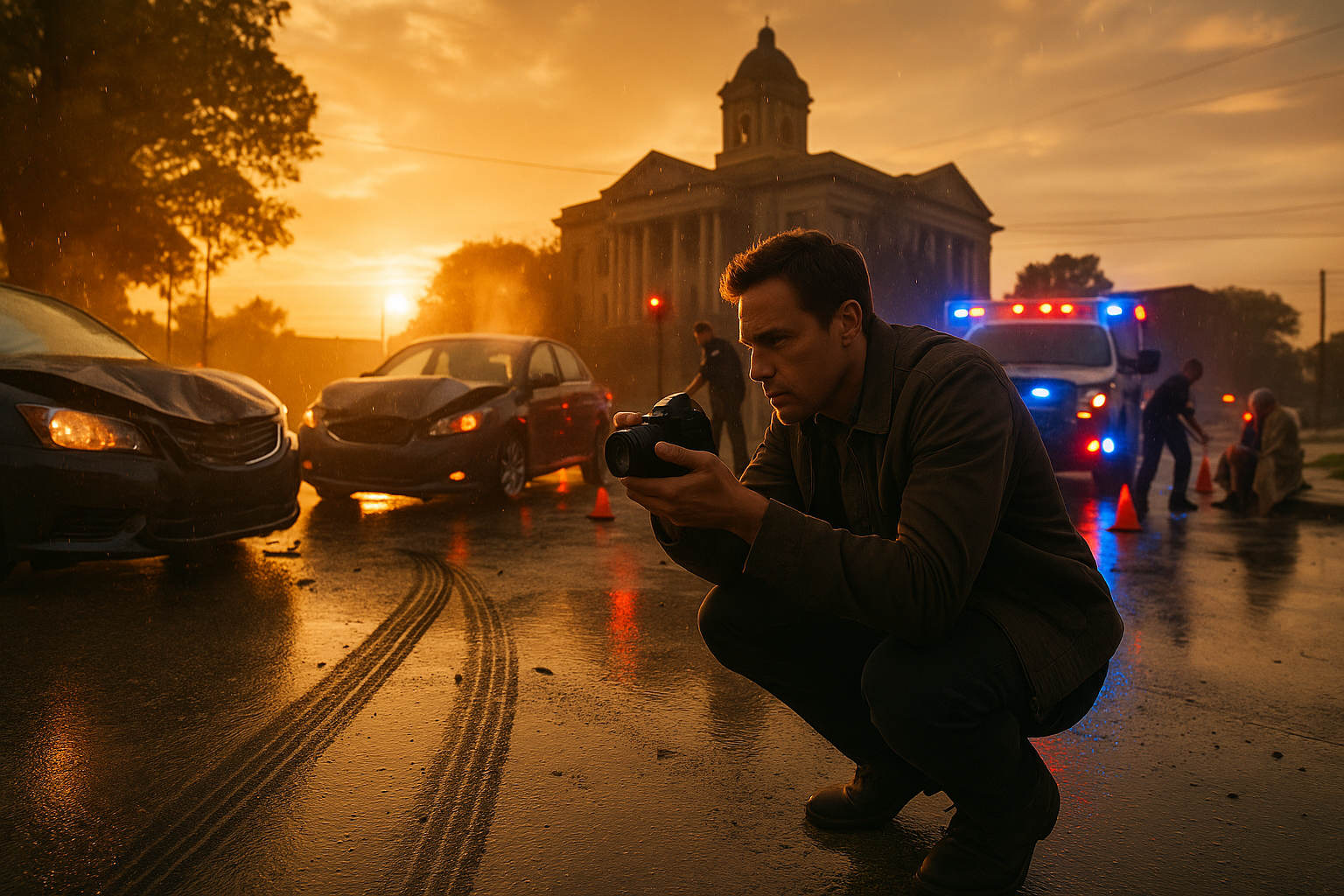
Use your phone to capture wide and close-up photos and video, including vehicle positions, skid marks, debris, road surface, traffic signs, signals, weather, lighting, and any visible injuries. Photograph all vehicles’ damage and license plates, as well as the other driver’s insurance card and driver’s license.
If bystanders saw the collision, politely request their names, phone numbers, and short written or recorded statements. Witness accounts can tip a liability dispute in your favor. For a detailed checklist you can follow at any crash scene, see this comprehensive guide to evidence collection at accident scenes.
Exchange information and avoid admissions
Exchange names, phone numbers, addresses, license numbers, plate numbers, and insurance details. Be courteous, but do not apologize, speculate on fault, or minimize your injuries. Simple phrases like “I didn’t even see you” can be interpreted as an admission against you later. Stick to facts when speaking with officers.
Seek medical care early and track symptoms
Adrenaline masks pain. Many people feel “fine” after a collision and later develop headaches, neck or back pain, dizziness, numbness, or abdominal symptoms. Get evaluated the same day if you can. Follow your provider’s plan, attend follow-up appointments, and keep a symptom log. Early medical documentation links your injury to the crash and supports your claim. For a deeper overview of what to capture and how to organize it, see this guide to injury documentation after auto accidents.
Reporting rules and deadlines that can affect your rights
Most auto policies require prompt notice of a collision, even if you were not at fault. Report the crash to your insurer as soon as reasonably possible to preserve coverage. If the other driver is uninsured or flees the scene, timely notice can be critical for uninsured motorist benefits.
Every state sets deadlines for insurance claims and lawsuits. Missing a deadline can bar your claim. Learn how time limits work and why prompt action matters in this explainer on car accident insurance claim time limits. If you’re uncertain which deadline applies, err on the side of acting early and documenting everything.
Fault, comparative negligence, and why evidence wins cases
Fault is not always clear. In many collisions, more than one driver contributes to the crash. When fault is shared, your recovery may be reduced by your percentage of responsibility. This is called comparative negligence. Because fault percentages drive payouts, the quality of your evidence—and how clearly it tells the story—can make the difference.
Learn how shared fault really works and how it can shape settlement offers in this plain-English guide to comparative negligence. The big takeaway: thorough documentation and consistent medical records strengthen your position if an insurer tries to shift blame your way.
Dealing with insurance adjusters without derailing your claim
Insurance adjusters may sound friendly, but their job is to minimize payouts. Expect requests for recorded statements, broad medical authorizations, and quick low offers. Move slowly, keep notes of every conversation, and avoid recorded statements until you understand the implications.
These practical tips can help you communicate confidently and protect your rights: mastering the process of dealing with insurance adjusters. As a rule, share only what is necessary and focus on facts. If you’re unsure how to answer a question, it’s okay to say you’ll follow up in writing.
The evidence that matters most
Photos, video, and dashcams
Clear, time-stamped images and video can resolve disputes about speed, lane position, signal use, or impact angles. If you have a dashcam, preserve the file and make a backup. If nearby homes or businesses have cameras, ask the owners promptly to save the footage. Most systems overwrite data quickly.
For how to preserve and use this kind of evidence, including best practices for submission to insurers, see this detailed guide on using dashcam footage for an accident claim.
Police reports and witnesses
Officer narratives, diagrams, and citations can carry weight with insurers. Witnesses can confirm what signals showed, who had the right of way, or whether a driver looked distracted. Ask officers how and when to obtain the report. If details are wrong, request an amendment with supporting evidence.
Medical records and daily symptom logs
Your medical records tie your injuries to the collision and track your recovery. A simple daily pain and activity log clarifies how your life changed—missed work, sleep disruption, mobility issues, and hobbies you can’t do. These details support non-economic damages such as pain and suffering.
How damages are valued in practice
Auto claims generally include economic and non-economic damages. Economic damages are the measurable financial losses: ER visits, follow-up care, prescriptions, physical therapy, medical devices, lost wages, reduced earning capacity, and property damage. Keep bills, receipts, mileage logs, and doctor notes to prove each category.
Non-economic damages cover the human side: pain, mental distress, loss of sleep, anxiety, and loss of enjoyment of life. These are real, but they require clear, consistent proof. For a step-by-step breakdown of the math behind claim valuation, review how to accurately calculate compensation for a car crash and this in-depth guide to calculating pain and suffering damages.
Property damage, total losses, towing, and storage
Take photos of all vehicle damage and request multiple repair estimates. If your car is a total loss, confirm the insurer’s valuation method and ask for comparable vehicles supporting your car’s pre-crash value. Keep receipts for towing, storage, rideshare, and rental costs.
If your car was impounded after the collision, track charges closely and act fast to reduce fees. Here’s a helpful walk-through on who pays towing and storage fees and how to recover costs.
Special scenarios that come up in and around New Richmond
Animal strikes: deer and wildlife collisions
In rural and semi-rural areas, deer and other wildlife collisions are common. If you struck an animal or swerved and crashed, take photos of the animal, fur on the vehicle, roadway markings, and any environmental indicators (e.g., deer crossing signs). Policies differ on coverage for animal strikes. Learn how to navigate these situations in this complete guide to animal-hit claims.
Hit-and-run or no-contact crashes
When a driver flees or forces you off the road without contact, uninsured motorist coverage may apply—but only if you meet strict evidence rules. Promptly report the crash to police and your insurer, document damage, and look for witnesses and nearby video.
For strategies to prove what happened when witnesses are scarce, see this resource on recovering damages after a no-witness hit-and-run.
Multi-vehicle collisions at busy intersections
Chain reactions can involve multiple insurers, competing narratives, and complex fault allocations. In these cases, photographs, diagramming, and independent witness statements matter even more. Preserve every detail—impact points, resting positions, and road debris—because one missing fact can shift fault percentages.
Pedestrian and cyclist injuries
Crashes involving people on foot or on bikes often produce serious injuries. Immediate medical evaluation, scene photos, skid marks, and shoe or bike damage photos can be decisive. Reflective clothing and lighting details may be relevant, as well as traffic signal timing if a crosswalk was involved.
Medical bills, liens, and insurance coordination
Accident medical billing can be confusing. Health insurance, auto medical payments coverage, or hospital liens may apply. Keep every bill, explanation of benefits, and letter. Ask your providers to bill insurance correctly and document any out-of-pocket costs.
If a lien is placed on your settlement, you’ll need to resolve it before you’re paid in full. Understanding who pays first—and how to protect your recovery—is essential. If you’re navigating post-settlement obligations, review strategies in this guide to medical bills and liens after car accident settlements.
Mental health matters too
It’s common to experience anxiety, sleep issues, mood changes, flashbacks, or avoidance after a crash. These are injuries too. Seek care from qualified mental health professionals and document your symptoms and treatment. These records may support non-economic damages and help your long-term recovery.
For practical ways to manage stress while protecting your claim, explore this piece on managing post-accident anxiety with supportive consultations.
Social media caution: how posts can undercut your claim
Insurers review social profiles. Posts showing physical activities, smiling outings, or travel—however innocent—can be taken out of context to argue you’re not injured. Tighten privacy settings, avoid discussing the crash or your injuries online, and ask friends not to tag you.
Read how seemingly harmless posts have hurt real cases—and how to protect yourself—in this explainer: can social media ruin an accident claim.
Common pitfalls that derail otherwise strong cases
- Delaying medical care or skipping follow-ups, creating gaps in treatment.
- Giving a recorded statement before understanding the full facts or your injuries.
- Signing broad medical releases that expose unrelated history.
- Posting about the crash on social media or messaging with the other driver.
- Assuming the insurer’s “final” offer is truly final.
Staying organized, patient, and careful pays off. Keep a single folder (digital or physical) with photos, videos, bills, mileage logs, prescription receipts, pay stubs, and a running log of all claim-related calls and emails.
Settlement vs. lawsuit: what to expect
Most cases settle after medical care stabilizes and damages are fully documented. If liability is disputed, injuries are significant, or offers are unfair, litigation may be the right path. A lawsuit timeline includes pleadings, discovery, depositions, expert evaluations, mediation, and—if needed—trial.
For a step-by-step look at how the process unfolds and how long it may take, this breakdown of auto accident lawsuit timelines can help set realistic expectations.
How to prepare a strong demand package
A persuasive demand ties evidence to damages in a clear narrative. It should include:
- A concise description of what happened, with photos and diagrams.
- Medical records and doctor opinions linking injuries to the crash.
- Wage loss documentation and employer verification.
- Proof of out-of-pocket costs, travel, and home-care needs.
- Support for non-economic damages, including symptom logs and statements from family, friends, or coaches about lifestyle changes.
Numbers matter, but so does storytelling. Your demand should make it easy to see how the collision changed your life—and why the requested amount is reasonable and evidence-based.
Answers to tough liability questions
Even simple-seeming crashes can raise complex legal issues. Distracted driving, unsafe lane changes, speeding, failure to yield, and poor weather can each play a role. If the other driver blames you, stay calm and anchor yourself in facts. This overview on negligence in car accident outcomes explains how facts, law, and evidence interact to determine fault and compensation.
Frequently overlooked expenses that add up fast
In addition to medical bills and vehicle repairs, track:
- Over-the-counter medications, braces, and supports.
- Home modifications or equipment (shower chair, handheld sprayer, ramps).
- Childcare or eldercare you had to arrange because of appointments or mobility limits.
- Gym memberships or activities you can no longer use or attend.
- Planned trips or events missed due to injuries.
Every receipt and note helps prove the full impact of the crash on your life and finances.
What to do if the other insurer calls you
Thank them for their call and request they put questions in writing. Ask for the adjuster’s name, title, claim number, phone, and email. Do not agree to a recorded statement until you fully understand your rights and the potential impact on your case. You can provide basic information—your name, contact details, and insurance—but avoid discussing injuries, treatment, or fault.
When to consider legal help
Legal guidance can be especially helpful if your injuries are significant, liability is disputed, multiple vehicles are involved, the at-fault driver is uninsured/underinsured, or an insurer minimizes your losses. An experienced advocate can gather and preserve evidence, engage the right experts, manage communications, and negotiate a fair resolution.
Conclusion
After a New Richmond car accident, you deserve clear guidance and a steady partner to protect your health, your finances, and your peace of mind. Prioritize safety and medical care, capture strong evidence, watch deadlines, and communicate carefully with insurers. With the right documentation and strategy, you can move forward confidently and seek the full compensation the law allows.
Need help now? Get a free and instant case evaluation by Visionary Law Group. See if your case qualifies within 30-seconds at https://eval.visionarylawgroup.com/auto-accident.
FAQ
Do I need a police report if officers didn’t respond?
A police report is extremely helpful but not always required. If officers can’t come, create your own record: take photos and video, exchange information, ask witnesses for statements, and report the crash to your insurer promptly. Use a checklist like the one in this evidence collection guide to make sure you don’t miss anything.
How long do I have to file an insurance claim?
Policies require prompt notice, and state law sets firm deadlines for lawsuits. Missing a deadline can end your case. Act quickly and learn how timing works in this overview of car accident insurance claim time limits.
What if both drivers share some fault?
Shared fault can reduce compensation based on each driver’s percentage of responsibility. That’s why thorough documentation is so important. Get up to speed on how this plays out in real claims with this guide to comparative negligence.
Should I give a recorded statement to the other insurer?
Not before you understand your rights and the full scope of your injuries. Adjusters use recordings to limit payouts. Review practical communication tips in this guide to working with adjusters and consider answering questions in writing instead.
What if the other driver fled the scene?
Report the hit-and-run immediately, look for witnesses and cameras, and notify your insurer promptly to protect uninsured motorist benefits. For strategies to pursue compensation when evidence is thin, read about recovering damages after a no-witness hit-and-run.